
🥛 Introduction: How Milk Transforms Cookies from Dry to Delicious
If you have ever wondered why so many cookie recipes call for a splash of milk, you are about to uncover one of baking’s quietest power moves. Milk in cookies may seem like a small ingredient, but in cookie dough, it’s a multi-tasking agent that influences everything from texture and spread to flavor and browning. Whether you use whole milk, skim milk, or even a dairy-free substitute, the chemistry inside that drop of liquid plays a surprisingly big role in how your cookies turn out.
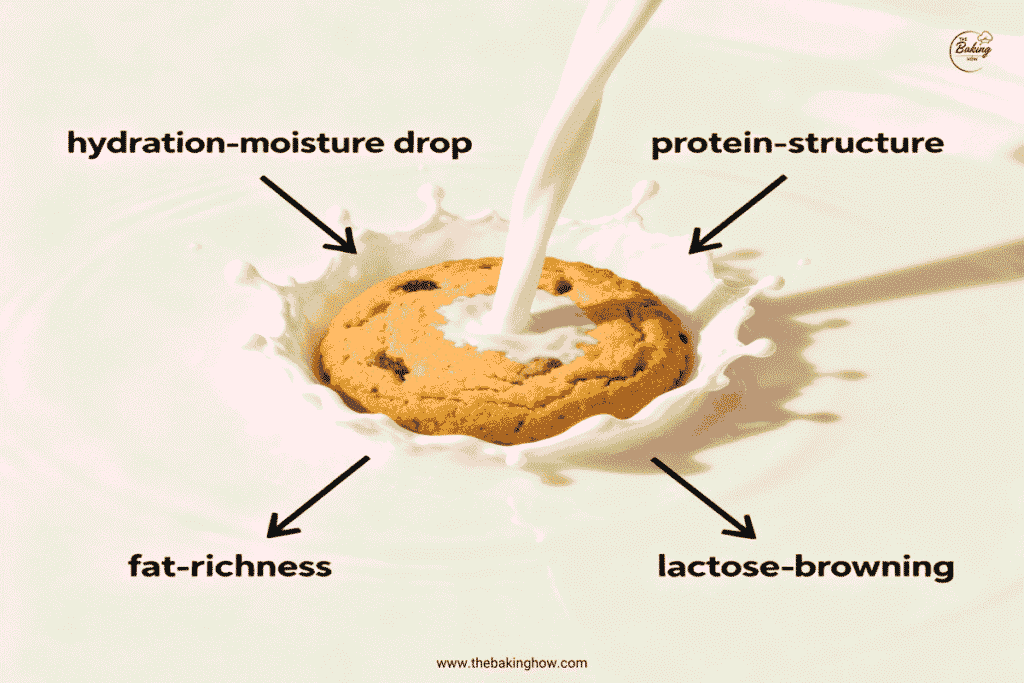
At its core, milk is a complex blend of water, protein, fat, and lactose (milk sugar) four components that interact directly with your cookie dough’s key ingredients: flour, sugar, and fat.
- 💧 Water hydrates the flour, forming gluten bonds that define structure.
- 🥚 Proteins (casein and whey) set during baking, helping cookies firm up while retaining chewiness.
- 🧈 Fat contributes richness and tenderness, balancing the crisp edges with a soft center.
- 🍬 Lactose caramelizes under heat, creating that golden color and subtle toasted flavor you love.
This combination explains why a cookie made with milk bakes differently than one made with just water or oil. It’s not just about adding moisture, it’s about controlling chemistry.
In this guide, we’ll explore how different types of milk from whole and skim milk to milk powder, condensed milk, and even dairy-free alternatives change your cookies’ texture, spread, and flavor. Along the way, I will share real test-kitchen insights from my 17 years in cookie formulation, plus pro techniques like toasting milk powder and browning butter with milk solids that elevate even basic cookie recipes to professional level.
🧠 By the end of this guide, you’ll understand exactly what milk does in cookies — and how adjusting your milk type or ratio can help you bake cookies that are softer, chewier, or richer, depending on your preference.
🧪 What Does Milk Do in Cookies? (The Baking Science Explained)
Milk isn’t just a liquid filler, it’s a functional ingredient that shapes how your cookies bake, brown, and taste. From professional bakeries to home ovens, milk influences everything from dough structure to flavor depth.
At its core, milk plays four critical roles in cookie chemistry 👇
🥛 The Science of Milk in Cookies (Click to Expand)
💧 Hydration
Effect on Cookies: Improves dough consistency and structure; overuse can cause spreading or soggy texture.
🥚 Protein Structure
Effect on Cookies: Adds chewiness and softness; helps maintain shape during baking.
🧈 Fat Content
Effect on Cookies: Enhances flavor, improves mouthfeel, and reduces dryness in crisp cookies.
🍬 Lactose
Effect on Cookies: Creates golden color, mild sweetness, and that signature toasty cookie flavor.
💡 Tip: Tap any function to reveal how milk transforms your cookie texture.
When these four mechanisms work together, milk transforms your dough at both a chemical and sensory level giving cookies their characteristic tenderness, balanced sweetness, and golden hue.
“While butter brings richness and spread to cookies, milk enhances texture balance by adding both moisture and structure. These two ingredients often work together — butter softens the crumb while milk stabilizes it for that ideal chewy bite.”
In industrial baking, milk and its derivatives (like cheese and butter) are valued primarily for flavor enhancement and color control. The exact flavor can vary seasonally depending on cow feed and fat composition, which is why professional biscuit manufacturers often blend different batches of milk and butter to ensure uniformity.
🧑🔬 Industry Insight:
Commercial “milk biscuits” in Europe must contain at least 2.4% milk solids by dry weight, while “butter biscuits” require a minimum of 7% butterfat. These standards help maintain consistent quality and flavor identity — a principle you can apply at home by using real butter and a small amount of milk powder for stability and taste.
“Years ago, I managed a commercial cookie batch that kept coming out too pale, even with perfect timing. It turned out the supplier had switched our milk powder to one with a lower lactose level — it completely changed the browning reaction. That’s when I realized even a tiny change in milk composition can transform cookie color and flavor.”
From a home baking perspective, milk’s moisture and protein content can be adjusted depending on your desired texture:
- For soft, chewy cookies, use whole milk or milk powder for richness.
- For crisp cookies, use less milk or a lighter option like skim.
- For deep flavor and browning, consider adding a spoonful of toasted milk powder.
💡 Pro Tip: Even brushing raw cookie dough with reconstituted milk before baking can add an attractive golden sheen and mild caramel note — similar to what large bakeries achieve using lactose solutions.
🍪 How Does Milk Affect Cookie Texture and Moisture?
Milk is one of the most powerful texture modifiers in cookie dough — and understanding its water, protein, and lactose content explains exactly why your cookies turn out chewy, soft, or crisp.
With around 87% water, milk plays two opposing roles:
- It hydrates flour, allowing gluten to form, which builds strength and chewiness.
- But that same water also encourages spread, as steam expands during baking.
So, just a few tablespoons of milk can shift your cookies from firm and thick to soft and wide — depending on the balance between flour absorption and fat ratio.
1. Moisture and Spread (Hydration Balance)
When milk enters cookie dough, its moisture hydrates flour particles, activating gluten strands and gelatinizing starch. This increases dough elasticity, but if there’s too much milk and not enough structure, cookies spread excessively in the oven.
💡 Pro Insight: Industrial bakers often adjust dough absorption rates by measuring flour’s water absorption capacity (usually 55–60%). That ensures consistent spread across production batches.
2. Protein Coagulation – The Invisible Framework
As cookies bake, casein and whey proteins in milk denature and coagulate, creating a micro-structure that traps gases and supports the cookie’s rise. This subtle network helps prevent collapse after baking and adds a slightly chewy bite.
🧁 In short: Milk proteins give structure where butter alone cannot — balancing crisp edges with a soft interior.
3. Lactose Caramelization – The Golden Secret
Unlike sucrose (table sugar), lactose in milk caramelizes at a higher temperature (around 212°C / 414°F). During baking, lactose reacts with amino acids from flour proteins through the Maillard reaction, producing:
- Richer golden-brown color
- Buttery, toasted flavor notes
- Enhanced aroma that feels “freshly baked” even hours later
🔬 This reaction is one reason commercial “milk biscuits” often look more appetizing and aromatic than water-based cookies.
“As milk’s lactose caramelizes, it deepens both flavor and color — a process similar to how brown sugar adds moisture and chewiness in cookie recipes.”
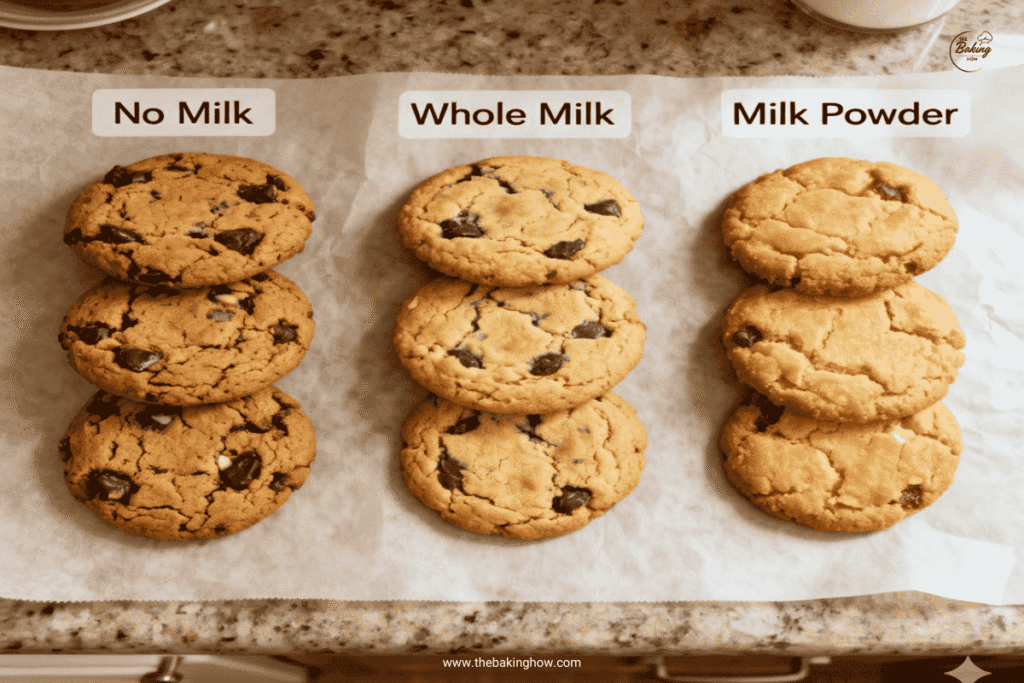
Comparison Chart: No Milk vs. Whole Milk vs. Milk Powder in Cookies
| Type | Texture | Moisture Level | Color & Flavor |
|---|---|---|---|
| 🚫 No Milk | Dense and slightly dry; limited spread. | Low moisture retention; crisp finish. | Paler color, mild flavor. |
| 🥛 Whole Milk | Soft, chewy texture with balanced spread. | Moderate moisture retention; tender bite. | Golden-brown color; rich dairy aroma. |
| 🍼 Milk Powder | Dense but rich; more body and flavor depth. | Enhanced moisture-binding; extended freshness. | Deep golden hue; nutty, caramelized flavor. |
💡 Tip: Milk solids in powder form enhance Maillard browning — for deeper flavor and color.
Summary
- More milk → more moisture, spread, and chewiness.
- Milk powder → deeper flavor, controlled spread, longer shelf life.
- No milk → crisper, lighter cookies with less browning.
🧑🍳 Pro Tip: To achieve bakery-style chewiness, add 1–2 teaspoons of milk powder to your dry ingredients — it enhances flavor and Maillard browning without adding extra liquid.
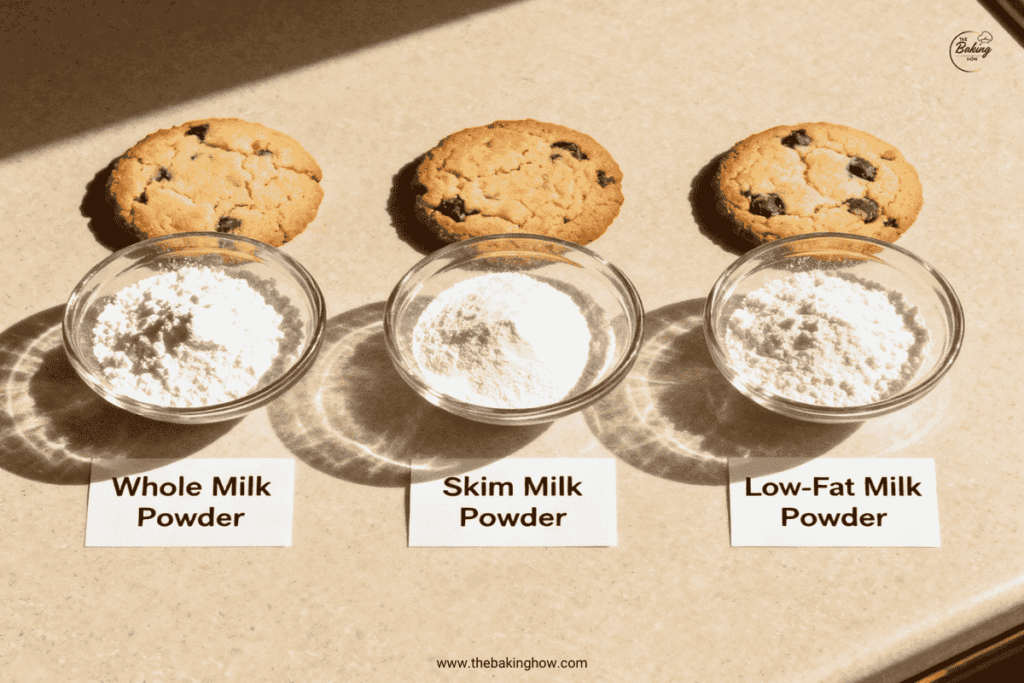
🥛 What’s the Difference Between Whole, Skim, and Low-Fat Milk Powders in Cookies?
When it comes to cookies, not all milk (or milk powder) is created equal. Each type whole, skim, or low-fat brings a unique balance of fat, protein, and lactose, and these differences directly affect cookie texture, flavor, and color.
In home baking, the choice mostly changes how rich or crisp your cookies feel.
But in commercial bakeries, where consistency and storage life matter, low-fat milk powders are often preferred because they deliver stable dough handling and controlled moisture without greasiness.
The Science Behind Milk Types in Cookies
| Milk Type | Approx. Composition | Functional Role in Cookies | Typical Result |
| Whole Milk / Full Cream Milk Powder (FCMP) | ~26–28% fat, 24–27% protein, 38–40% lactose, ~5% moisture | Adds richness and enhances Maillard browning; higher fat softens structure | 🍪 Soft, rich, and flavorful cookies with golden color |
| Low-Fat Milk Powder | ~10–12% fat, 34–36% protein, 45–48% lactose | Balances tenderness and structure; reduces greasiness and cost | 🍪 Even-textured cookies with mild dairy flavor |
| Skimmed Milk Powder (SMP) | <1% fat, 36% protein, 50% lactose | Promotes browning and firm edges; adds subtle caramel flavor | 🍪 Lighter, crisp-edged cookies with toasty hue |
| Whey Powder | Trace fat, 12–14% protein, 70% lactose | Cost-effective substitute; enhances color and mild sweetness | 🍪 Crispy, golden cookies but with lighter dairy notes |
Whole vs. Skim Milk: Texture and Flavor Impact
- Whole milk (or full-cream milk powder) adds fat that tenderizes the gluten network, resulting in softer and richer cookies. It also deepens flavor and promotes uniform browning.
- Skim milk, on the other hand, contains more protein but almost no fat. It gives cookies a firmer bite and crisper edge — ideal for shortbread or crunchy cookies.
- Low-fat milk strikes a balance — keeping dough manageable and consistent in large-scale production while preventing over-spread during baking.
🧑🔬 Industry Insight:
In biscuit manufacturing, fresh milk is rarely used because it contains ~87% water, shortens shelf life, and causes cream separation. Instead, dried milk powders (especially skimmed or whey-based) are preferred for their low moisture, stability, and flavor control.
Skim milk powder (SMP) is prized for its Maillard reactivity — the lactose inside promotes natural browning, giving cookies their characteristic golden bloom without added colorants.
Cookie Texture Comparison by Milk Type
| Milk Type | Texture Outcome | Flavor Depth | Color / Appearance |
|---|---|---|---|
| 🥛 Whole Milk | Soft, moist, and rich structure. | Full-bodied dairy flavor with balanced sweetness. | Deep golden with uniform browning. |
| 🥣 Low-Fat Milk | Tender center with slightly crisp rim. | Moderate richness and subtle creaminess. | Light golden hue, even spread. |
| 🍼 Skim Milk | Crisper edges and a firmer bite. | Light dairy taste with reduced richness. | Brown-speckled, slightly drier appearance. |
| 🌾 Whey Powder | Crunchy texture with quicker surface browning. | Subtle sweetness from natural milk sugars. | Golden-brown color with a glossy surface. |
💡 Pro Tip: Whole milk offers the best balance of flavor, texture, and browning in most cookie recipes.
Quick Takeaways
- 🧈 Whole milk = softness & flavor (best for chewy cookies)
- 🥣 Low-fat milk = balance (used in bakeries for control & consistency)
- 🍼 Skim milk = crisp edges (great for butter cookies or shortbread)
- 🌾 Whey = economical (good for color, mild flavor, long shelf life)
💬 Pro Tip: For richer cookies without adding extra liquid, mix ½ tablespoon of full-cream milk powder per 100 g flour — this amplifies flavor, improves browning, and gives that bakery aroma.
🥫 What’s the Difference Between Evaporated and Condensed Milk in Cookies?
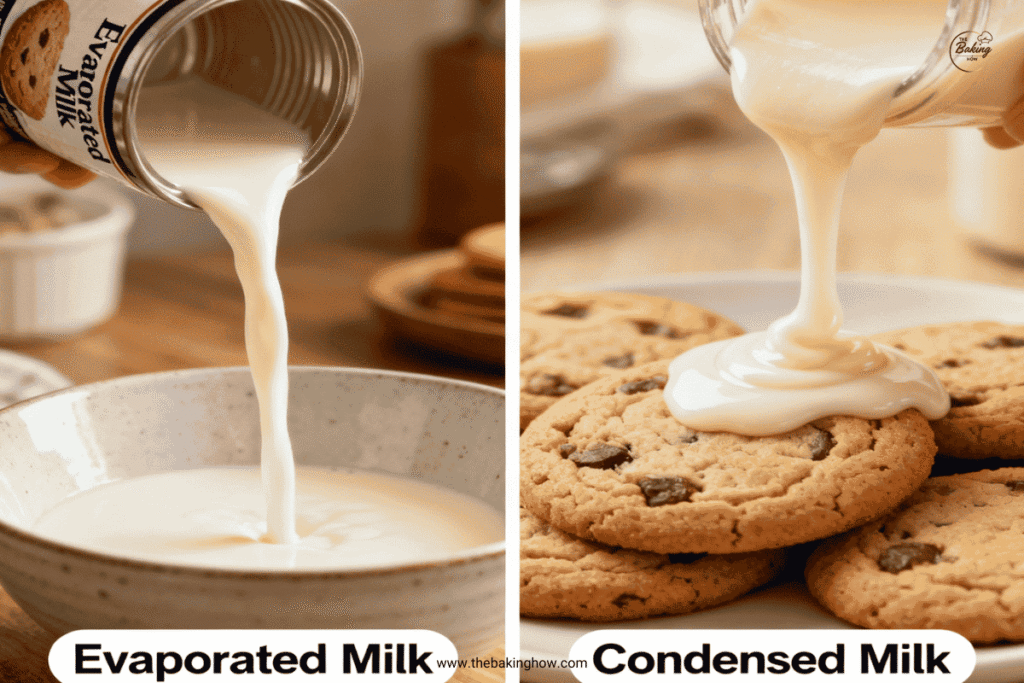
When it comes to evaporated milk vs. sweetened condensed milk in cookies, the difference isn’t just about sweetness, it’s about moisture control, chewiness, and caramelization.
Both are made by removing around 60% of the water from fresh milk, but their final compositions and effects on cookies are completely different.
Evaporated Milk (Unsweetened)
Evaporated milk is simply whole milk with reduced water content, giving it a slightly concentrated flavor and light caramel color from gentle heat processing.
It’s unsweetened, making it a versatile ingredient for both sweet and savory baking.
In cookies, evaporated milk contributes:
- 💧 Moderate moisture (without excess sweetness)
- 🍪 Subtle creaminess and smoother dough handling
- 🔬 Gentle Maillard browning from lactose concentration
However, since it lacks sugar, it doesn’t add chewiness — instead, it creates balanced, mildly crisp cookies with a clean dairy flavor.
Sweetened Condensed Milk
Sweetened condensed milk, on the other hand, contains ~62.5% sugar, which acts as a preservative, humectant, and sweetener.
This dense syrupy milk traps moisture, making cookies chewier, richer, and slightly caramel-like after baking.
Its high lactose and sugar content fuel intense Maillard and caramelization reactions, resulting in:
- 🍮 Deep golden color and glossy finish
- 🍫 Fudgy, chewy interiors
- 🍬 Buttery, toffee-like sweetness
That’s why sweetened condensed milk is the star ingredient in holiday cookies, caramel bars, and “magic bar” recipes — it builds both texture and visual appeal.
🧑🔬 Industry Insight:
Sweetened condensed milk’s high sugar level (around 62.5%) prevents bacterial growth, giving it an exceptionally long shelf life.
However, storage at high temperatures can cause browning — something commercial bakeries carefully control to maintain consistent product color.
Comparison: Evaporated Milk vs. Condensed Milk in Cookies
| Type | Sugar Content | Moisture Effect | Texture Outcome | Best Used For |
|---|---|---|---|---|
| 🥛 Evaporated Milk | Unsweetened (≈0–2%) | Moderate hydration, light steam release. | Balanced texture — tender but not sticky. | Crisp butter cookies, shortbreads, and tea biscuits. |
| 🍯 Sweetened Condensed Milk | Very high (≈62%) | High moisture retention, creates chewy density. | Fudgy, caramelized, and rich in flavor. | Caramel bars, holiday cookies, “magic” layers. |
Quick Takeaways
- Evaporated milk → Mild, smooth, lightly crisp cookies
- Condensed milk → Chewy, sweet, and caramelized cookies
- Avoid 1:1 substitution — condensed milk is both sweeter and thicker, and can overwhelm dough if not adjusted properly
💬 Pro Tip: To balance condensed milk’s sweetness, reduce sugar in your recipe by 25–30% and increase flour slightly for structure.
🧈 How Does Buttermilk Affect Cookie Texture and Flavor?
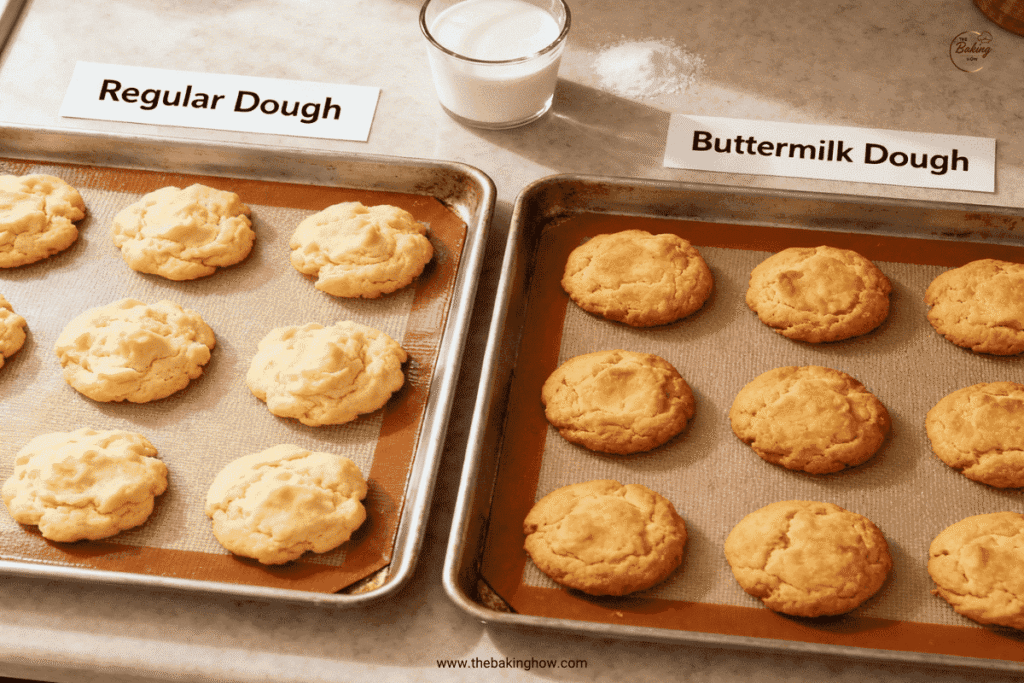
If you’ve ever wondered why some cookies bake up extra soft and tender, the secret may be buttermilk.
Unlike regular milk, buttermilk is slightly acidic (pH ≈ 4.5–4.8) and that acidity plays a major role in how your cookie dough develops structure, flavor, and lift.
1. Acidity Tenderizes Gluten
When buttermilk is added to cookie dough, its acidity weakens the gluten network that forms when flour and water combine.
That’s good news for cookie texture — it prevents the dough from becoming tough or bread-like, leading to softer, more tender cookies.
🧑🍳 In short:
The acid in buttermilk “shortens” gluten strands, giving cookies a delicate crumb and melt-in-your-mouth bite — especially in recipes using high-protein flour.
2. Buttermilk Reacts with Baking Soda for Lift
Chemically speaking, buttermilk pairs beautifully with baking soda.
When these two combine, the acid (lactic acid in buttermilk) reacts with the alkaline sodium bicarbonate in baking soda to release carbon dioxide gas.
This gas creates tiny air bubbles in the dough, which expand during baking, giving cookies a lighter, puffier texture with a soft center.
🧪 Baking Science Tip:
This reaction happens instantly when mixed — so to capture maximum lift, bake soon after adding buttermilk to your dough.
🔗 Learn more about this chemical reaction in our guide: Baking Soda vs. Baking Powder in Cookies
3. Flavor and Browning Effects
Buttermilk also brings a subtle tanginess that enhances sweetness and depth of flavor, a flavor contrast similar to the balance of salt in desserts.
However, since it’s acidic and less sweet than regular milk, it can slightly reduce browning in cookies that rely on sugar caramelization or Maillard reaction.
That’s why professional bakers often reduce brown sugar slightly (by 10–15%) to neutralize the extra acidity and maintain balanced flavor and color.
Texture & Flavor Comparison: Regular Milk vs. Buttermilk in Cookies
| Milk Type | Acidity Level (pH) | Gluten Effect | Texture Outcome | Flavor Profile |
|---|---|---|---|---|
| 🥛 Regular Milk | 6.5–6.7 (neutral) | Normal gluten development | Soft but slightly chewy | Creamy, mild sweetness |
| 🍶 Buttermilk | 4.5–4.8 (acidic) | Gluten relaxation & softer crumb | Fluffy, tender, with extra lift | Tangy-sweet with rich dairy notes |
Quick Takeaways
- 🧈 Acidity = tender gluten, softer crumb
- 🧪 Reaction with baking soda = lighter texture, extra lift
- 🍯 Slight tang = balanced sweetness & complex flavor
- ⚖️ Pro Tip: Reduce brown sugar slightly when using buttermilk to maintain color and sweetness balance
💬 Bonus Insight: Industrial bakers often replace buttermilk with acidified milk powders or lactic acid blends for cost control and consistency, achieving similar texture results in large-scale cookie production.
🌱 Can You Use Dairy-Free Milks in Cookies? (Best Plant-Based Options)
Absolutely — and if you are baking for vegan or lactose-intolerant friends, dairy-free milks can perform surprisingly well in cookies.
The key lies in their protein, fat, and carbohydrate composition, which determines how much structure, spread, and flavor they contribute to the dough.
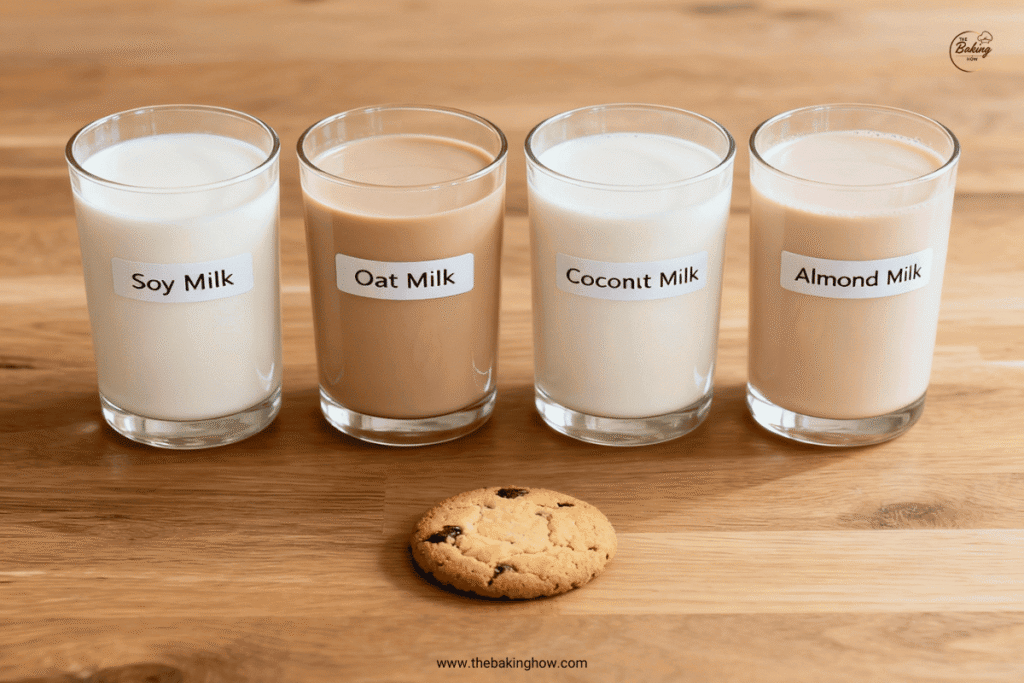
Here’s how the top plant-based milks compare ranked by baking performance, not taste alone:
🥇 Soy Milk — highest in protein, best for structure and color
🥈 Oat Milk — balanced hydration and subtle sweetness
🥉 Coconut Milk — rich and creamy, but less structural strength
🟤 Almond Milk — lightest, crisp texture, mild flavor
How Plant-Based Milks Behave in Cookie Dough
Each dairy-free milk interacts differently with gluten, sugar, and fat. The main variable is protein content, which helps stabilize dough and create that desirable chewiness in cookies.
Low-protein milks, like almond or coconut, often result in flatter or crisper cookies, while higher-protein options (like soy milk) mimic dairy more closely.
🧑🍳 Pro Tip:
When using plant-based milks, compensate for missing proteins by adding ½ teaspoon soy lecithin or 1 tablespoon oat flour per 120 g of flour — it improves binding and moisture retention.
“Non-dairy bakers often rely on fat sources like coconut oil or shortening to mimic milk’s creamy structure.”
Comparison Chart: Best Dairy-Free Milks for Cookies
| Plant-Based Milk | Protein (per 240 ml) | Fat Content | Texture in Cookies | Flavor Notes |
|---|---|---|---|---|
| 🥇 Soy Milk | 7 g | 4 g | Soft, slightly chewy; spreads moderately. | Neutral, dairy-like flavor with balanced browning. |
| 🥈 Oat Milk | 3 g | 5 g | Tender texture; retains moisture well. | Naturally sweet, mild oat aroma. |
| 🥉 Coconut Milk | 2 g | 9–12 g | Soft but heavy; limited structure. | Rich, buttery, coconut flavor. |
| 🟤 Almond Milk | 1 g | 2.5 g | Crispy, lighter texture; higher spread. | Nutty, subtle sweetness. |
💡 Tip: For dairy-free cookies that mimic classic chewiness, soy milk performs best due to its higher protein content.
🔬 What Are Advanced Baking Techniques Using Milk?
Once you’ve mastered the basics of how milk affects cookie texture, it’s time to explore advanced techniques that transform your cookies from homemade to bakery-quality.
These methods use milk solids, lactose, and proteins to deepen browning, build structure, and boost flavor — the secret behind professional cookie labs and pastry kitchens.
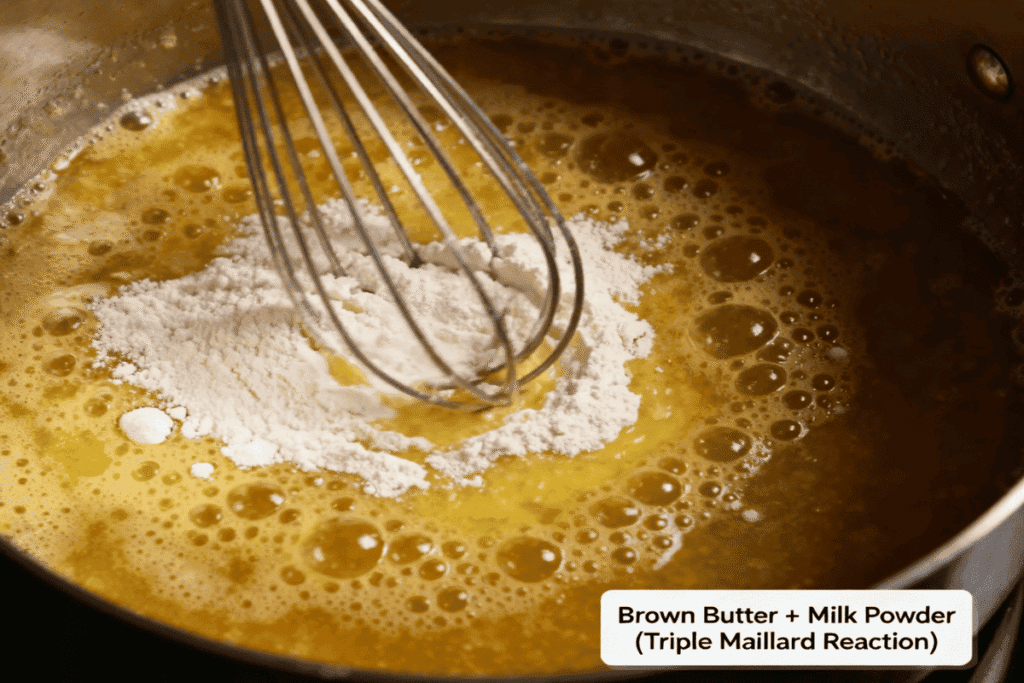
1. The Brown Butter + Milk Powder Combo (Triple Maillard Browning)
One of the most powerful modern baking techniques is browning butter together with milk powder — often called the Triple Maillard Effect. This color change happens due to the Maillard reaction, a natural chemical process between amino acids and sugars that gives baked goods their golden hue.
Here’s how it works:
When butter is melted, its milk solids sink to the bottom of the pan.
By adding a teaspoon of milk powder while browning, you dramatically increase the number of proteins and sugars available for the Maillard reaction, creating:
🍯 Deep amber color
🍫 Intense toffee-caramel flavor
🌰 Nutty aroma that lingers even after cooling
🧑🍳 Pro Insight:
Add milk powder once butter starts foaming — not before — to avoid burning the proteins. The ideal color is hazelnut brown, not dark brown.
🔗 For more on caramelization chemistry, see: Syrups in Cookies – Expert Guide to Sweet Perfection
2. Hydration Rest Period (24-Hour Dough Chill)
Letting cookie dough rest for at least 12–24 hours after mixing allows milk’s proteins and sugars to:
- Hydrate the flour evenly
- Deepen flavor through enzymatic sugar breakdown
- Strengthen dough for more controlled spread during baking
This technique, famously used by top pastry chefs, results in more complex flavor, darker color, and chewier texture.
It’s the same principle used in artisan bread baking time unlocks better structure and flavor.
💡 Pro Tip: When resting dough with milk or milk powder, cover tightly and refrigerate. The moisture redistribution stabilizes fat and prevents uneven spreading.
3. Toasting Milk Solids for Nutty, Caramelized Flavor
Toasted milk solids are tiny bits of concentrated dairy protein when browned carefully, they taste like caramelized white chocolate or dulce de leche.
In professional baking, chefs isolate milk solids (from butter or powdered milk), toast them until golden, and then fold them into cookie dough.
This creates an incredible depth of flavor toasty, buttery, and slightly savory — especially in chocolate chip or shortbread cookies.
👨🔬 How to make toasted milk solids:
- Heat 2 tbsp butter or ghee until the solids separate and brown.
- Strain, dry the solids, and crush them.
- Mix into your dough or use as a topping.
Result: a cookie that smells like brown butter and milk chocolate at the same time. 🍪
4. Industry Technique: Adding Milk Powder at the Creaming Stage
In large-scale bakeries, milk powder isn’t added randomly — it’s added during the creaming stage with butter and sugar.
This simple adjustment enhances:
- Emulsification (fats and water mix more evenly)
- Texture uniformity (fewer air pockets)
- Moisture retention during baking
Essentially, the lecithin and phospholipids in milk act as natural emulsifiers, improving dough consistency and final cookie quality.
🏭 Professional Insight:
Commercial bakeries often use low-heat spray-dried milk powders because they retain more soluble whey proteins giving a more pronounced flavor and smoother dough texture.
Summary Table: Advanced Milk Techniques and Their Baking Impact
| Technique | Process | Effect on Cookies | Best Used For |
|---|---|---|---|
| 🧈 Brown Butter + Milk Powder | Cook butter with milk powder until golden brown. | Boosts color, toffee flavor, and nutty aroma. | Chocolate chip & brown sugar cookies. |
| 🥛 24-Hour Dough Hydration | Refrigerate dough overnight before baking. | Enhances structure, chewiness & flavor depth. | Chewy cookies, brown butter cookies. |
| 🔥 Toasted Milk Solids | Brown milk solids or milk powder separately. | Adds nutty, caramelized, and complex notes. | Shortbread & white chocolate cookies. |
| ⚙️ Milk Powder at Creaming Stage | Blend milk powder with butter & sugar early in mixing. | Improves emulsification, consistency & tenderness. | All cookie dough types. |
💡 Pro Insight: Combining browned butter + milk powder unlocks deep caramel notes and a signature bakery aroma.
Quick Takeaways
- 🔥 Browning with milk powder → triple flavor boost via Maillard reaction
- 🥛 Resting dough overnight → deeper flavor, better structure
- 🍫 Toasted milk solids → elevate aroma & richness like bakery cookies
- ⚙️ Add milk powder early → smoother, more uniform dough
💬 Pro Tip: These techniques work synergistically — for the ultimate cookie, try browned butter + milk powder + 24-hour rest. It’s a flavor trifecta professional bakers swear by.
⚠️ Common Mistakes When Using Milk in Cookies
Even though milk enhances flavor, softness, and color, it’s surprisingly easy to misuse.
Small miscalculations in milk quantity or temperature can throw off hydration, spread, and texture balance especially when combined with butter or eggs.
Here are the most common baking mistakes involving milk — and how to fix them like a pro 👇
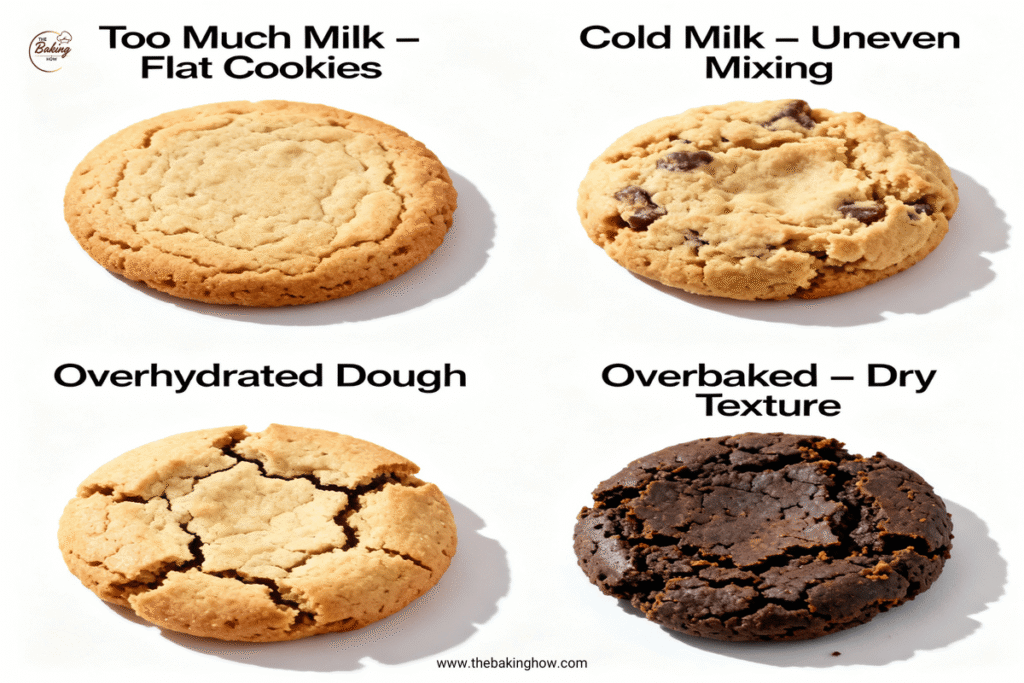
1. Using Too Much Milk → Soggy or Flat Cookies
A little milk goes a long way in cookie recipes.
When you add too much, you increase the dough’s water content, which:
- Makes cookies spread excessively in the oven
- Leads to soggy, cake-like centers
- Weakens the gluten structure
💡 Fix: If you accidentally add extra milk, balance it by adding 1–2 tablespoons of flour or a teaspoon of milk powder to restore structure.
2. Not Adjusting Flour → Overhydrated Dough
Milk hydrates flour’s proteins (gliadin + glutenin), forming gluten.
Without increasing flour slightly, your dough can become too wet, causing poor shaping and uneven bake.
💡 Fix: For every tablespoon of milk added, increase flour by 1½ tablespoons or chill dough longer before baking.
🔗 Related Reading: Why Are My Cookies Too Soft? — explains how extra moisture from ingredients like milk or butter can lead to soft, underbaked cookies.
3. Adding Cold Milk → Uneven Mixing and Structure Collapse
Cold milk can solidify butter during the creaming stage, breaking the emulsion.
This results in uneven texture and collapsed centers once baked.
💡 Fix: Always use room-temperature milk (around 21–23°C) when mixing. This keeps the fat emulsion stable and ensures smooth blending with sugar and flour.
4. Overbaking Cookies → Dry, Crumbly Texture
Milk proteins (especially casein) brown faster due to the Maillard reaction.
If cookies stay in the oven too long, the milk solids over-brown and dry out, making cookies crumbly or chalky.
💡 Fix: Reduce baking time by 1–2 minutes or lower temperature by 10°C when using milk powder or high-protein milk ingredients.
Quick Summary: Milk Mistakes & Fixes
Quick Takeaways
- Milk is hydrating, not just flavorful — measure precisely.
- Always balance with flour to prevent spreading.
- Use room-temp ingredients for consistent structure.
- Watch for faster browning when milk solids are used.
🧁 Expert Note: In commercial baking, precise moisture calibration is standard — bakers adjust milk solids and baking time to within ±1% hydration tolerance for uniform results.
🥛 Conclusion: The Unsung Hero Behind Perfect Cookie Texture
Milk quietly does more work in cookie baking than most people realize.
It adds moisture for softness, fat for richness, protein for structure, and lactose for browning — all combining to create cookies that are chewy, flavorful, and beautifully golden.
Whether you use whole milk, milk powder, or even a non-dairy alternative, each one changes how your cookies taste and feel.
The secret is balance — just the right amount of milk can take your cookies from ordinary to bakery-perfect. 🍪✨
💡 Try this: Bake two small batches — one with whole milk, another with milk powder — and see how the texture and color change.
Milk might be a small ingredient, but it’s the unsung hero behind that perfect chewy bite.
🔗 Next Step: Master the Full Cookie Ingredient Science
To see how milk works alongside flour, butter, and sugar, check out
👉 How Ingredients Affect Cookie Texture
That’s where the real cookie chemistry begins. 🍪🔬
❓ FAQs About Milk in Cookies
🥛 Can I use water instead of milk in cookies?
Yes, but your cookies will lose some richness and color.
Milk adds fat, protein, and lactose, which help cookies brown evenly and stay soft.
If you use water, reduce it slightly and add a bit more butter or sugar to keep the flavor balanced.🍪 What kind of milk makes cookies chewy?
Whole milk or milk powder works best for chewy cookies.
Their higher fat and protein content help hold moisture inside the dough, giving cookies a soft and tender bite.
Low-fat or skim milk creates drier, crisper cookies because it lacks those extra solids.🌤️ Does milk make cookies rise more?
Not directly — milk doesn’t act as a leavening agent, but it supports rise indirectly.
Its proteins help strengthen the dough structure, while natural sugars improve browning and spread.
For extra lift, milk works best when paired with baking soda or baking powder.🧈 Can I use milk powder and fresh milk together?
Yes — this is actually a pro baker’s trick.
Combining the two gives richer flavor and a deeper golden color because milk powder boosts the Maillard reaction.
Just reduce the liquid milk slightly so the dough doesn’t get too wet.💧 What happens if I add too much milk?
Too much milk makes cookie dough sticky and overhydrated, causing cookies to spread too much or bake up soggy.
To fix it, add a bit more flour or milk powder to restore balance — or chill the dough for 30 minutes before baking.