Salt in Cookies – What It Does and Why It Matters

Do cookies really need salt?
It’s a question every home baker has asked at some point while following a recipe. After all, cookies are meant to be sweet so why add something salty? The short answer is yes, cookies absolutely need salt, and the reason goes far beyond flavor.
With over 17 years of hands-on baking experience, I have seen how even a small pinch of salt can make or break a batch of cookies. Salt doesn’t just enhance taste, it also plays a crucial role in balancing sweetness, improving texture and flavor, and even influencing how your dough behaves in the oven.
In this post, you will discover the science behind salt in cookies, what happens if you skip it, the best types of salt to use, and smart substitutions if you are cutting back on sodium. By the end, you will know exactly how to use salt to bake cookies that are flavorful, balanced, and bakery-worthy.
🧂 Why Do We Add Salt in Cookies?
Most home bakers ask: “Why do cookie recipes call for salt when they’re supposed to be sweet?” The short answer → salt makes cookies taste better ✅.
Salt balances sweetness and enhances other flavors. Without it, cookies often taste flat, overly sweet, or even bland. Even a small “pinch” makes chocolate chips richer, vanilla warmer, and butter nuttier. That’s why nearly every cookie recipe includes at least a little salt.
🍪 Salt as a Flavor Enhancer
Scientifically, salt (sodium chloride, NaCl) interacts with your taste buds to:
- 🔹 Balance flavors – cutting excess sweetness.
- 🔹 Enhance aromas – unlocking chocolate, butter, and spices.
- 🔹 Improve mouthfeel – making cookies taste more rounded and satisfying.
This is why the so many bakers search for “why salt in cookies”- they notice the difference immediately.
🏭 Salt in the Baking Industry (Professional Insight)
From my 17 years of baking industry experience, I can confirm that salt isn’t just for flavor. It also plays a technical role in doughs and batters:
- Concentration matters → the sweet spot is 1–1.5% based on flour weight. Go above 2.5%, and the taste turns unpleasant.
- Gluten development → in cookies with more gluten (semi-sweet, cracker-style), salt strengthens the dough and reduces stickiness.
- Fermentation control → in yeast-based doughs, salt slows down fermentation, preventing over-proofing.
- Proteolytic enzyme activity → it slightly inhibits enzymes that weaken gluten, keeping structure intact.
- Decoration → in the industry, coarse salts are sometimes sprinkled on top of savory or sweet-salty cookies for added crunch and flavor.
👉 In short: salt is a dual-purpose ingredient — a flavor booster for home bakers and a functional dough improver for professionals.

🧪 What Does Salt Do in Cookies? (The Baking Science)
Salt isn’t just about taste — it actually plays a big role in the chemistry of your cookie dough. Here’s how it works behind the scenes:
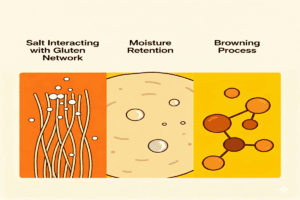
💪 Strengthens Gluten (Texture Control)
When flour meets water, gluten forms and gives cookies their structure.
Salt helps tighten and strengthen this gluten network, leading to a dough that’s less sticky, more manageable, and slightly firmer. Without it, cookies can sometimes spread too much or feel weak in texture.
🍪 Boosts Browning (Maillard Reaction)
Salt enhances the Maillard reaction — the same browning process that makes cookies golden, aromatic, and irresistible. A pinch of salt encourages deeper flavors and that beautiful caramelized look. Too little salt = pale and flat tasting cookies.
💧 Improves Moisture Retention
Salt helps dough hold onto water, which keeps cookies from drying out too quickly. This means your cookies stay softer and fresher for longer instead of turning crumbly or stale. See our blog on how ingredients affect cookie texture.
🔑 In short: Salt is not just seasoning — it’s a functional baking ingredient that improves texture, color, and shelf life.
Do Cookies Need Salt? What Happens if You Forget It?
🧂 The short answer: yes, cookies need salt—and you’ll notice right away if it’s missing. Salt might seem like a tiny ingredient, but without it, cookies often taste flat, overly sweet, and bland. That little pinch balances the sugar, rounds out flavors, and makes chocolate, butter, and vanilla “pop.”
👉 What happens if you forget salt in cookies?
- The cookies won’t be inedible, but they’ll taste one-dimensional.
- You may feel like you’re eating a spoonful of sugar instead of a balanced treat.
- Chocolate chip cookies, sugar cookies, and shortbread are especially affected because they rely heavily on that flavor contrast. Learn more about cookie dough issues.
A Real Taste-Test Example
In my 17 years working in baking, I’ve run side-by-side tests with salted vs. salt-free cookie dough. The difference is immediate: the salted batch tastes full-bodied, while the no-salt version feels dull—even though the recipes are identical except for that pinch of salt.
Industry Perspective 🏭
In commercial bakeries, salt is so important that we even sprinkle granular salt on top of savory crackers (think salted crackers or Tuc). If the salt distribution is uneven, the product fails quality control and the batch isn’t packed for sale. That shows how critical salt is—not just for taste but also for consistency.
💡 Pro Tip:
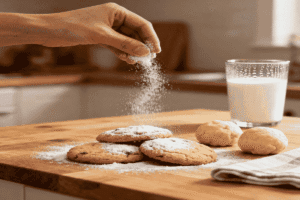
If you accidentally baked cookies without salt, don’t toss them out! Sprinkle a small pinch of flaky sea salt (like Maldon or kosher salt) on top after baking. It won’t fully fix the dough, but it will instantly brighten the flavor and add a delicious crunch.
<!doctype html>
Do Cookies Need Salt? What Happens if You Forget It?
Use this interactive tool to explore how salt affects cookie flavor and texture. Adjust salt level, compare salted vs unsalted samples, and get quick fixes if your batch is missing salt.
0 = no salt · 50 = ¼–½ tsp (typical) · 100 = very salty
Taste-test simulation results
Use the controls to run a quick simulation.
FAQs
Do chocolate chip cookies need salt?
Can I skip salt if using salted butter?
How Much Salt Should You Add to Cookies?
⚖️ Getting the right salt level in cookies is a balance. Too little, and your cookies taste flat. Too much, and the flavor becomes harsh and unpleasant. For a precise quantity of ingredients use our Free Quick Baking Converter.
Home Baking Guideline 🍪
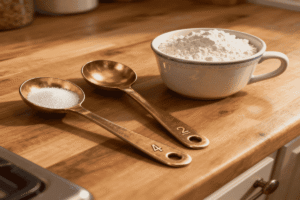
- A good rule of thumb is ¼ to ½ teaspoon of salt per cup of flour.
- For a standard batch of chocolate chip cookies, most recipes call for about ½ teaspoon of salt.
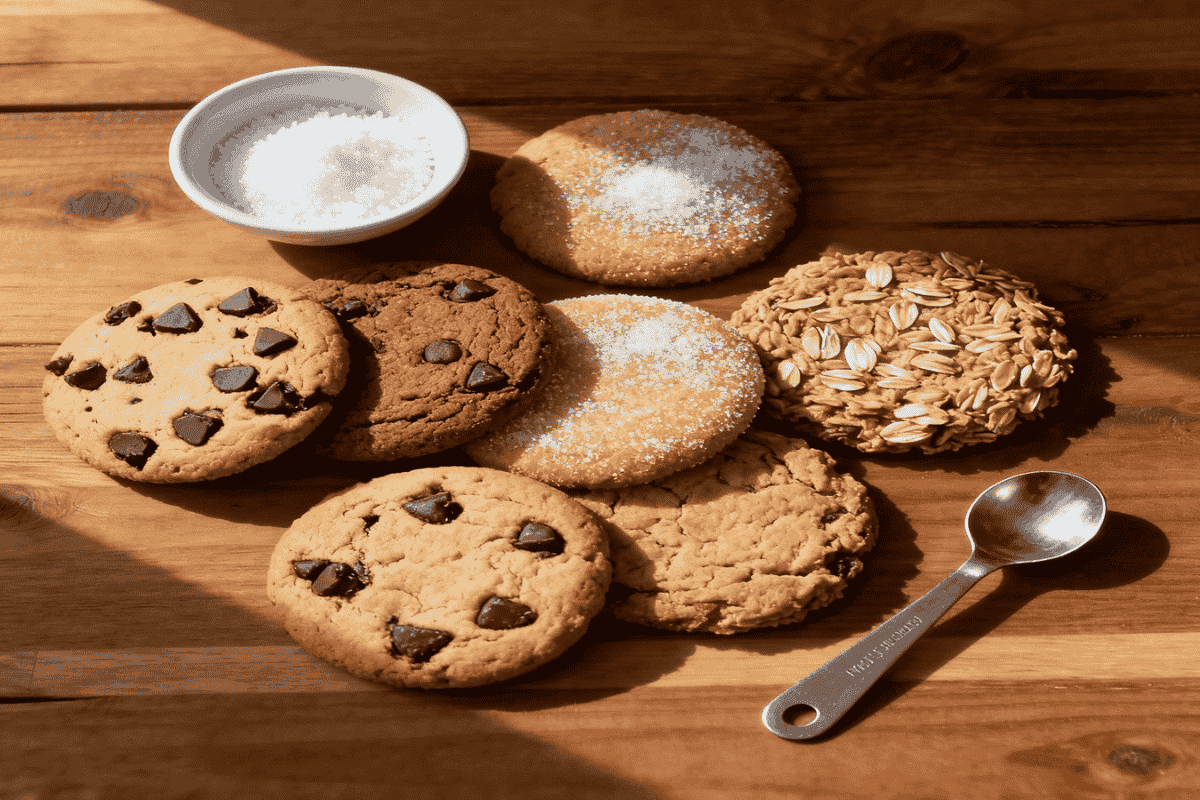
- Sugar cookies usually need a little less—around ¼ teaspoon per cup of flour, since their flavor is more delicate.
- Oatmeal cookies, with hearty oats, benefit from a bit more salt (closer to ½ teaspoon) to balance their earthiness.
👉 When you see “a pinch of salt” in a recipe, it usually means about 1/16 teaspoon—just enough to enhance sweetness without being noticeable.
Industry Standard 🏭
In professional baking, we don’t measure in teaspoons—we measure by weight. Salt is most effective at about 1–1.5% of the flour weight. Go above 2.5%, and the taste becomes unpleasant. This precision ensures consistency across large-scale production. For more on ingredients, see basic cookie ingredients and best flour for cookies.
💡 Pro Tip: Always consider the type of butter you’re using.
- If your recipe calls for unsalted butter, stick with the guidelines above.
- If you’re using salted butter, reduce the added salt slightly to avoid over-seasoning.
What Type of Salt Is Best for Cookies? 🧂
Not all salts are created equal—choosing the right type can subtly affect flavor, texture, and even the appearance of your cookies.
Common Types Used in Baking
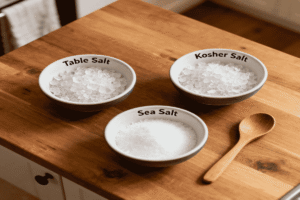
- Table Salt – Fine, consistent, and commonly found in kitchens. It dissolves quickly, making it a safe default for most cookie recipes.
- Kosher Salt – Coarser crystals, often favored by professional bakers. Its texture gives a slightly milder saltiness and can enhance the crunch when sprinkled on top.
- Sea Salt – Harvested from evaporated seawater, it may contain trace minerals. Adds a more complex flavor and is often used as a finishing touch for cookies.
Salt Origins & Flavor Nuances 🌍
Salt has been harvested for thousands of years—from ancient sea salt pans to underground mines. Its origin affects mineral content, which can subtly influence taste. For instance:
- Himalayan pink salt contains iron oxide and other minerals that give it a mild, slightly earthy flavor.
- Celtic sea salt is moist and mineral-rich, adding depth to buttery cookies.
💡 Baker’s Tip: For classic cookies like chocolate chip or sugar cookies, table salt or fine kosher salt works perfectly. Reserve specialty salts for finishing touches—sprinkling lightly on top just before baking can give your cookies a gourmet touch.
Salt Crystal Sizes & Baking Performance 🔬
The size of salt crystals affects how quickly it dissolves and how the flavor distributes in your cookies. Here’s a simplified view based on typical industrial analysis of pure vacuum-dried salt:
For the Baking Nerds: A Technical Look at Salt Size
| BS Mesh No. | Aperture (µm) | % Cumulative Over-Tails |
| 12 | 1400 | 0.1 |
| 16 | 1000 | 2.6 |
| 18 | 850 | 8.5 |
| 22 | 710 | 15.0 |
| 25 | 600 | 27.0 |
| 30 | 500 | 38.0 |
| 36 | 425 | 52.0 |
| 44 | 355 | 70.0 |
| 52 | 300 | 83.0 |
| 60 | 250 | 90.0 |
| 72 | 212 | 95.0 |
| 85 | 180 | 97.0 |
| 100 | 150 | 99.0 |
| 200 | 75 | 99.9 |
| Pan | — | 100.0 |
These results give a mean aperture of 420 µm with coefficient of variation 42%.
Key takeaway for baking:
- Finer salts (smaller apertures) dissolve faster and distribute more evenly in cookie dough.
- Coarser salts take longer to dissolve, giving little bursts of saltiness when biting into a cookie.
- Bulk density affects how much salt you scoop by volume—important if you measure by teaspoons instead of weighing.
Can You Make Cookies Without Salt? ❌🧂
Yes, you can technically bake cookies without salt, but it comes with trade-offs. Salt isn’t just a flavor enhancer—it plays a role in balancing sweetness, improving texture, and even affecting browning. Skipping it will usually result in bland cookies, even if the dough looks fine.
Home Baking Alternatives 🌿
For those on low-sodium diets or wanting to experiment, there are a few ways to enhance flavor without traditional salt:
- Use salted butter – If your recipe calls for unsalted butter, using salted butter can partially replace added salt.
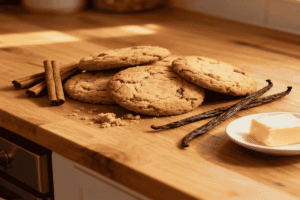
- Cinnamon or spices – Add warmth and depth to sugar cookies or snickerdoodles.
- Vanilla or almond extract – These can enhance perception of sweetness and complexity.
⚠️ Note: These substitutes don’t replicate the chemical role of salt in cookies—they mostly improve flavor. You may still notice subtle differences in texture or sweetness balance.
Industry Perspective 🏭
In professional baking, salt is never substituted. Its effects on dough structure, gluten development, and Maillard browning are critical for consistent results. Even “low-sodium” commercial cookies typically reduce salt carefully rather than removing it entirely.
💡 Baker’s Tip: If you try a salt-free cookie at home, taste-test the dough before baking. You might need to adjust sugar or spice levels to achieve a satisfying flavor.
How to Fix Cookies That Are Too Salty 🍪⚖️
Sometimes even experienced bakers over-salt their cookies. Don’t worry—there are a few ways to rescue your batch and balance the flavor.
Practical Solutions
- Add more dough
- If you’re still shaping or baking cookies, mix in a little extra unsalted dough to dilute the salt concentration. This is the most effective way to reduce saltiness.
- Balance with sugar or sweetness
- A small drizzle of honey, maple syrup, or a light dusting of powdered sugar can help counteract excess salt. Be careful not to make them overly sweet. Check out our guide on brown sugar vs white sugar in cookies.
- Serve with milk or cream
- Salted cookies can taste milder when paired with milk, coffee, or tea, as the beverage helps neutralize the salty flavor.
- Salted cookies can taste milder when paired with milk, coffee, or tea, as the beverage helps neutralize the salty flavor.
💡 Baker’s Tip: Always taste a small piece of dough before baking. It’s easier to adjust salt at the dough stage than after cookies are baked.
Conclusion: Mastering Salt in Cookies 🧂🍪
Salt may seem like a tiny ingredient, but as we’ve seen, it plays a big role in baking perfect cookies. From enhancing flavor and balancing sweetness to improving texture and supporting browning, salt is both a functional ingredient and a flavor booster.
Key Takeaways:
- Use the right amount: ¼–½ teaspoon per cup of flour for home baking, or 1–1.5% of flour weight in professional settings.
- Choose the right type of salt: table salt and fine kosher salt are versatile, while specialty salts work well as finishing touches.
- Understand the impact of salt: it strengthens gluten, improves moisture retention, and enhances browning.
- Alternatives exist for low-sodium baking, but they can’t fully replicate salt’s chemical role—taste and texture may differ.
- If cookies are too salty, there are practical fixes: adjust the dough, balance with sugar, or pair with milk or cream.
With this knowledge, you can confidently use salt to create cookies that are flavorful, balanced, and bakery-worthy, whether you’re a home baker experimenting in your kitchen or a professional aiming for consistent results.
Mastering salt isn’t just about following a recipe—it’s about understanding how it works in your dough. Apply these tips, and every batch of cookies you bake will taste just right.
“Now I’d love to hear from you! Have you ever forgotten the salt in your cookies? Share your experience in the comments below!”