
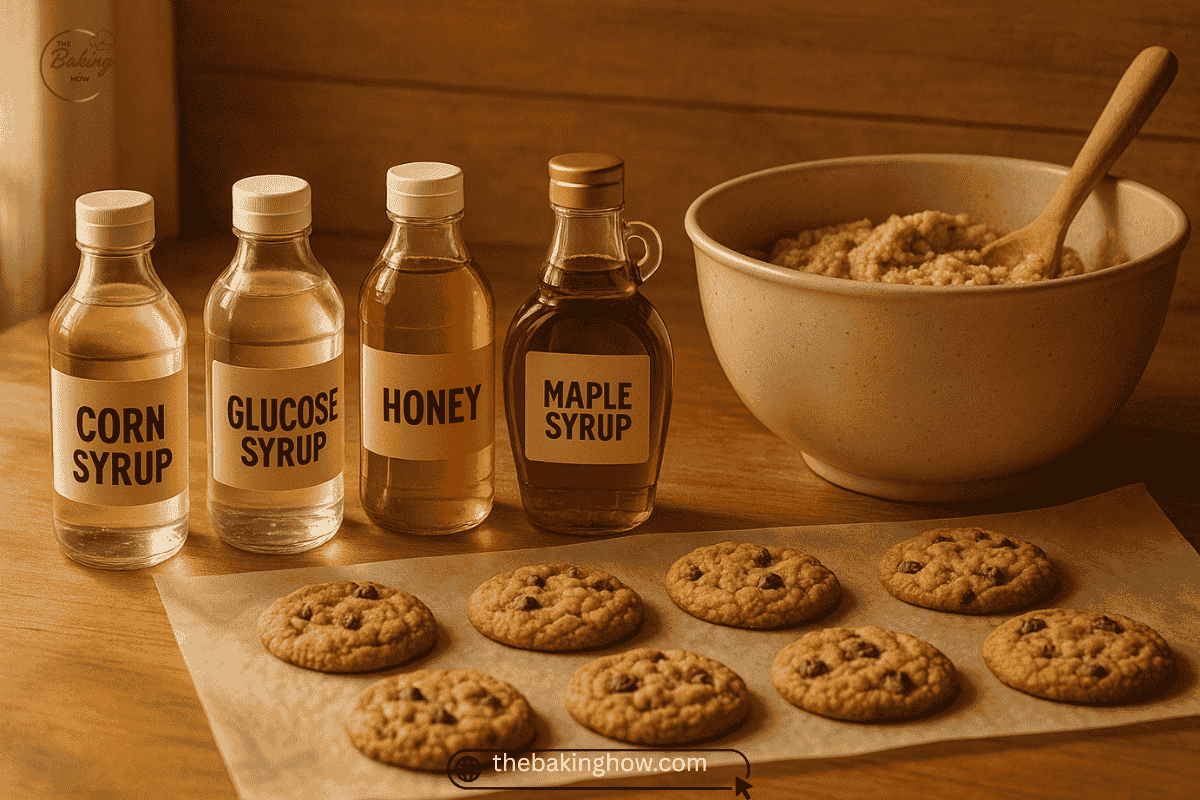
🍯 Introduction — Why Syrups in Cookies Matter
Ever wondered why some cookies stay soft, chewy, and moist for days while others turn crisp overnight?
💡 The secret often lies in syrups in cookies — the liquid sweeteners that quietly shape texture, flavor, and freshness. Just like other basic cookie ingredients, syrups play a quiet but powerful role in shaping texture, sweetness, and moisture balance.
As someone who has spent over 17 years in the cookie industry, I have seen firsthand how small ingredient tweaks can completely transform a batch. Whether it’s a drizzle of corn syrup, a spoonful of honey, or a touch of maple syrup, each type of syrup behaves differently in dough and understanding that chemistry is the key to baking mastery.
In this guide, we will break down the science behind liquid sweeteners in baking, explore how professional bakers use glucose and invert syrups to control moisture and spread, and reveal which syrup is best for creating your ideal cookie texture whether you love them soft and bendy or crisp with a golden snap.
You will learn:
- Why syrups make cookies chewier (the science of hygroscopic sweetness)
- How each syrup affects spread, flavor, and shelf life
- When and how to substitute one syrup for another — without ruining your dough
By the end, you’ll know exactly which syrup to use and why, backed by food chemistry, baking science, and nearly two decades of real-world cookie production experience.
For a deeper look into how liquid sweeteners affect cookie texture and moisture balance, King Arthur Baking explains the science behind syrups in baking.
🍬 What Do Syrups Do in Cookies?
If you’ve ever wondered how ingredients affect cookie texture, syrups are one of the biggest moisture controllers in your dough. That magic comes from syrup functionality in cookies — the science of how liquid sweeteners behave differently from granulated sugar.
Let’s uncover what really happens inside the dough. 👇
The Science Behind Liquid Sweeteners
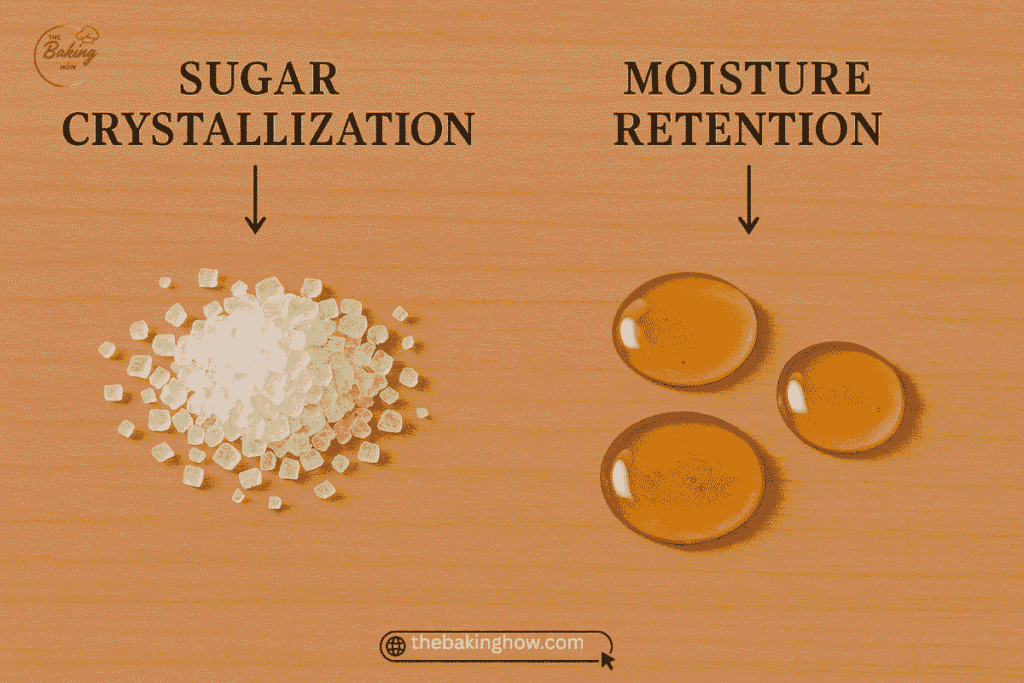
Syrups are hygroscopic, which means they naturally attract and hold water molecules.
This single property changes everything in your cookies:
- 💧 Moisture retention: Syrups lock in water, keeping cookies soft and chewy long after baking.
- ❄️ Anti-crystallization: Liquid sweeteners prevent sugar from crystallizing, so your cookies stay smooth instead of grainy.
- 🍪 Chewiness and spread: The extra liquid loosens gluten and sugar bonds, helping cookies spread evenly and giving that satisfying bend instead of a snap.
In baking science terms, syrups act as humectants — moisture magnets that stabilize sweetness, enhance texture, and improve shelf stability.
How Syrups Affect Cookie Structure
Unlike granulated sugar, syrups also work as natural binders in cookie dough.
They help ingredients cling together, creating a dough that’s easier to shape and less prone to cracking.
Here’s how they impact structure:
- 🧩 Binding ability: Syrups blend fats, flours, and sugars into a uniform dough — improving texture and consistency.
- 🕒 Extended freshness: Their hygroscopic nature slows staling, keeping cookies soft for days.
- 🍯 Shape control: Syrups reduce crystallization and control spread during baking — giving cleaner edges and even shapes.
In short, syrups are the architects of texture — balancing chewiness, structure, and freshness in every bite.
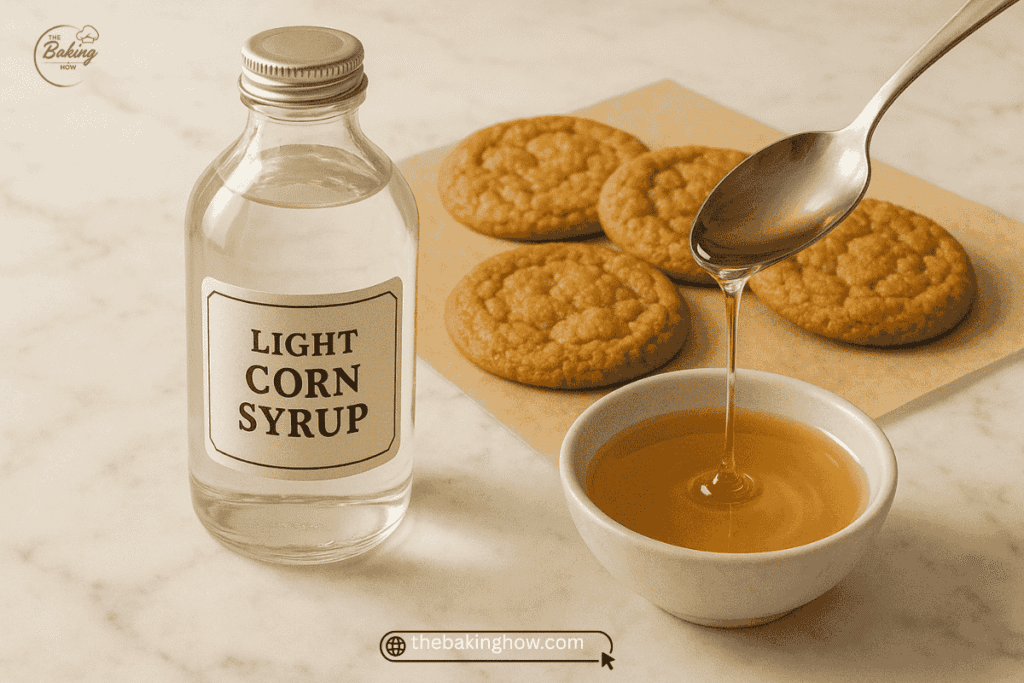
🍯 What Does Corn Syrup Do in Cookies?
Corn syrup is one of the most misunderstood ingredients in cookie baking — yet it’s a game-changer for texture and consistency. Corn syrup gives cookies that bendy, bakery-style chew. But use too much, and you might end up with cookies that turn out too soft or overly moist.
Let’s explore what really happens when you add it to cookie dough. 👇
Light vs. Dark Corn Syrup
Corn syrup comes in two main varieties — and the one you choose can change both flavor and color of your cookies:
- 🌾 Light corn syrup is mild, clear, and mostly flavor-neutral. It’s ideal for classic sugar cookies, shortbread, or soft drop cookies where you don’t want the syrup to dominate the taste.
- 🌰 Dark corn syrup contains molasses, giving it a deeper color and rich, caramel-like flavor. It’s perfect for gingerbread, chocolate chip, or oatmeal cookies when you want a more robust taste and darker hue.
Pro Tip: Bakers often mix light and dark corn syrup to balance sweetness and flavor depth.
Corn Syrup’s Functional Role in Cookies
Corn syrup isn’t just about sweetness — it plays multiple functional roles that make your cookies softer, chewier, and more stable:
- 🧬 Prevents crystallization: The glucose molecules in corn syrup interfere with sucrose crystals, keeping cookies smooth instead of grainy.
- 🍪 Adds chewiness and moisture: As a hygroscopic ingredient, corn syrup locks in water, giving cookies that bakery-style bend instead of a brittle snap.
- 🎯 Balances sweetness: Unlike granulated sugar, corn syrup has a milder sweetness (about 60–70% as sweet as sucrose), allowing other flavors — like butter, vanilla, and chocolate — to shine.
A Look Behind the Science
Corn syrup is made by breaking down starch molecules, typically from maize, through acid hydrolysis or enzymatic conversion.
This process transforms long carbohydrate chains into simpler sugars like glucose, resulting in syrups with varying sweetness and viscosity.
Depending on how far the process goes, you get different ratios of glucose, maltose, and dextrins — and that mix determines how well the syrup retains moisture or controls crystallization.
That’s why professional bakers often choose specific corn syrup grades based on desired cookie softness and spread control.
In short:
Corn syrup is more than a sweetener — it’s a texture enhancer and moisture regulator that helps cookies stay soft, glossy, and delicious longer.
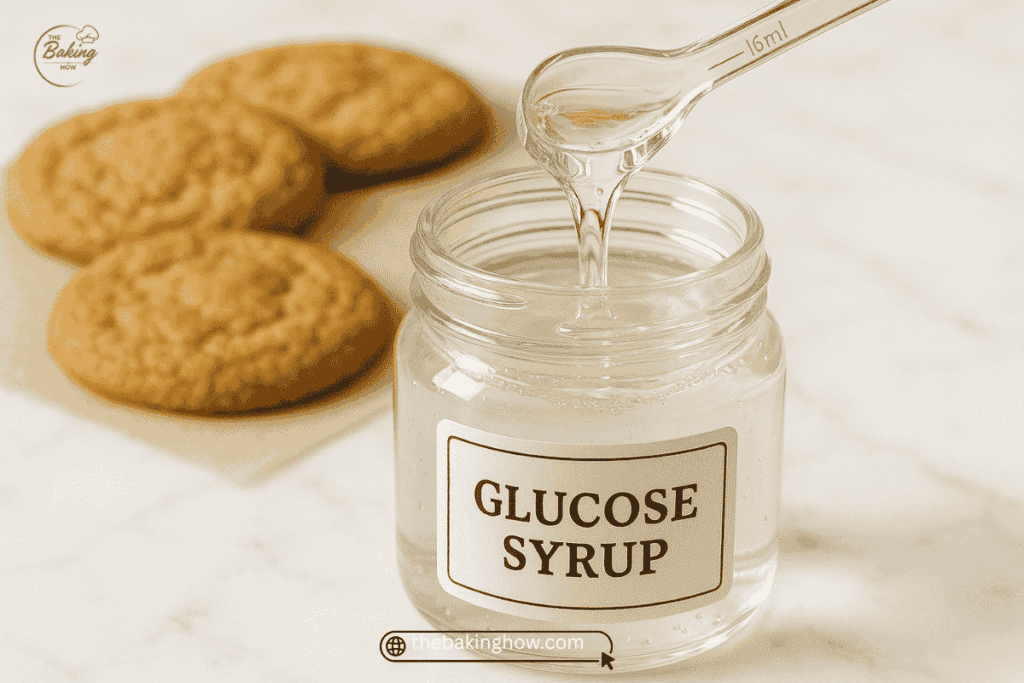
🍬 How Does Glucose Syrup Work in Cookies?
Glucose syrup behaves differently than corn syrup—it’s less sweet but better at controlling humidity. Together with fats and oils in cookies, it helps balance softness and structure beautifully.
Glucose Syrup vs. Corn Syrup
While corn syrup and glucose syrup are often used interchangeably, they’re not exactly the same — and knowing the difference can help you master your cookie texture.
Glucose syrup is made by hydrolyzing starch (usually from maize, wheat, or potatoes) into smaller sugar molecules.
This process creates a thick, glossy syrup that’s less sweet than sucrose and even less sweet than corn syrup — making it ideal when you want texture without overwhelming sweetness.
🔬 In cookies:
- Glucose syrup adds moisture control and enhances spread management.
- It reduces crystallization, producing smoother doughs and uniform crumb texture.
- High DE syrups add more shine and tenderness; low DE versions help with structure and crispness.
Professional Baker’s Choice
In my 17+ years in the cookie industry, I’ve seen glucose syrup used widely in commercial and professional baking — not just for sweetness, but for precision.
Here’s why pastry chefs prefer it:
- 🌟 Gloss and color: Glucose syrup contains reducing sugars that promote a beautiful golden-brown crust through the Maillard reaction.
- 🍪 Chewy texture: It helps cookies stay soft and flexible longer by retaining just enough moisture.
- 🏭 Scalability: Glucose syrup is economical, shelf-stable, and easy to blend — perfect for large-batch cookie production.
It’s even used in savory or semi-sweet biscuits, where sweetness isn’t the goal. In those cases, glucose syrup enhances surface coloration and provides a subtle crispness without making the product taste sugary.
High Fructose Corn Syrup (HFCS) vs. Glucose Syrup
A quick note on confusion: High Fructose Corn Syrup (HFCS) is technically a type of glucose syrup that has been enzymatically converted to contain more fructose (40–90%), making it much sweeter.
That’s why HFCS behaves more like sugar, while pure glucose syrup is prized for its body, stability, and control, not its sweetness.
In short:
Glucose syrup acts as a texture engineer — balancing moisture, controlling spread, and enhancing color — while keeping your cookies from becoming overly sweet or brittle.
🍯 What Makes Invert Syrup Special for Cookies?
Invert syrup promotes deeper browning and a smooth crumb—similar to what happens when understanding why some cookies brown faster than others.
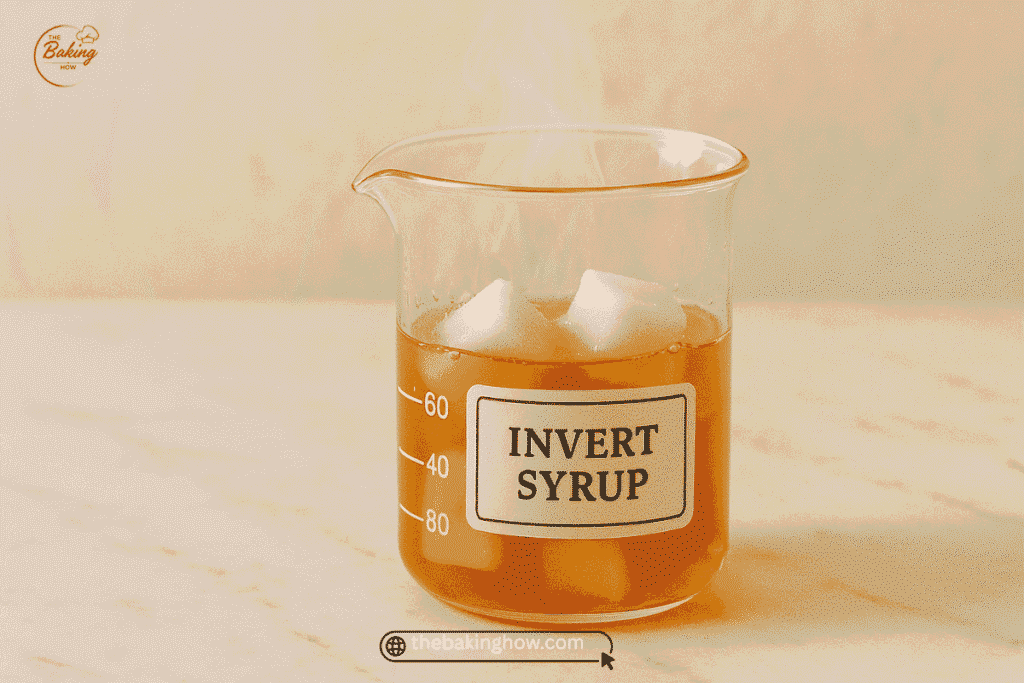
What Is Invert Syrup?
Invert syrup is a special kind of liquid sugar created when sucrose (table sugar) is broken down into glucose and fructose through heat and acid (or enzymes like invertase).
This process — known as inversion — changes both the sweetness and behavior of sugar in baking.
Because the molecules are smaller and more hygroscopic (water-attracting), invert syrup stays moist and resists crystallization, giving baked goods a smoother texture and longer shelf life.
In commercial baking, it’s made by heating a sugar solution with mild acid at around 75°C for an hour, then neutralizing it with sodium bicarbonate. The result is a clear, slightly salty syrup that contains about 80% solids and 5% more sugars than the original sucrose due to water uptake during hydrolysis.
🧁 From my 17 years in the cookie industry:
Invert syrup is one of those “hidden ingredients” you’ll see in professional cookie factories — it keeps cookies soft for weeks, not days.
Invert Syrup’s Role in Cookies
Invert syrup plays several subtle yet powerful roles in cookie dough:
- Enhances softness and chewiness: Its moisture-binding property prevents cookies from drying out.
- Promotes even browning: Glucose and fructose are reducing sugars that intensify the Maillard reaction, giving cookies a rich golden hue.
- Improves shelf life: By holding moisture and preventing recrystallization, it slows down staling — especially valuable for commercial or packaged cookies.
- Balances sweetness: Slightly sweeter than sucrose (about 105 on the sweetness scale vs 100 for sugar), so you can use less and still get great flavor.
💡 Pro Tip for Home Bakers:
If you can’t find invert syrup, you can make a quick version at home:
Combine 2 cups sugar, 1 cup water, and ½ teaspoon lemon juice, simmer gently until it thickens slightly and turns pale golden. Cool and store in a clean jar — it’ll keep for several weeks.
According to Ragus Sugar Manufacturing, the sugar chemistry behind invert, glucose, and corn syrups explains their unique roles in texture, sweetness, and moisture control.
🍪 Dry Glucose, Dextrins, Dextrose & Fructose in Cookies
What Are Dry Glucose and Dextrose?
When starch-based syrups (like glucose syrup) are spray-dried, they turn into fine, free-flowing white powders — collectively known as dry glucose, dextrins, dextrose, or fructose.
- These powders typically contain less than 7% moisture (for DE ≤ 65).
- Maltodextrin (DE 17–20) is commonly used in baking — it’s barely sweet and helps balance dough consistency.
- Dextrose monohydrate (DE 99.5), a purified crystalline sugar, is the most common solid form used in cookies.
💡 Fun fact: The term “DE” (Dextrose Equivalent) measures how far the starch has been broken down — higher DE means more sweetness and reducing power.
How Dextrose Behaves in Cookie Dough
Dextrose is less sweet than regular sugar (sucrose) — but it brings its own set of superpowers to cookie baking:
✅ Promotes Browning: Dextrose accelerates the Maillard reaction, giving cookies a beautiful golden-brown color and a subtle toasty flavor.
✅ Adds Unique Cooling Sensation: When it dissolves, dextrose produces a slight cooling effect on the tongue, adding a refined mouthfeel.
✅ Balances Moisture: Because it’s hygroscopic, it helps retain some moisture, resulting in a softer chew in certain cookie types.
However, bakers need balance ⚖️ — excessive dextrose can draw too much moisture, causing sandwich cookies to separate or soften unevenly over time.
Pro Baker Insight
“In professional cookie production, dextrose powder is often used alongside sucrose — not as a replacement — to fine-tune color, flavor, and texture,” explains food technologist Dr. Sara Jenkins.
Commercial bakeries also use maltodextrin to improve dough handling, reduce stickiness, and stabilize formulas with lower sweetness levels — especially useful in savory biscuits or low-sugar cookies.
Quick Takeaway
Dextrose and its related starch sugars may not add much sweetness, but they play a quietly powerful role in your cookie’s color, moisture, and texture. Think of them as your baker’s toolkit for texture tuning — especially when you want:
- Less sweetness but more Maillard browning
- A soft yet stable texture
- Better control of humidity and spread during baking
🍯 Can You Use Honey as a Natural Syrup in Cookies?
Honey behaves much like brown sugar in baking—it darkens the dough and boosts chewiness. You can learn more about how sugar type affects color and chewiness here.
Honey’s Unique Qualities
Honey isn’t just a sweetener — it’s a complex natural syrup made by bees from flower nectar, and every batch tells a different story.
- The flavor, color, and aroma depend on the floral source — clover, acacia, orange blossom, or wildflower honey all create distinct cookie notes.
- Honey is sweeter than sugar (about 1.2–1.3× more intense), so bakers often use slightly less of it in recipes.
- It contains invert sugars (about 75%), small amounts of sucrose, minerals, and aromatic compounds that enhance the overall depth of flavor.
💡 Fun fact: Laboratory analysis shows honey typically contains about 17–18% water, ~75% invert sugar, and trace minerals — a composition that makes it both flavorful and functional in baking.
How Honey Affects Cookie Texture
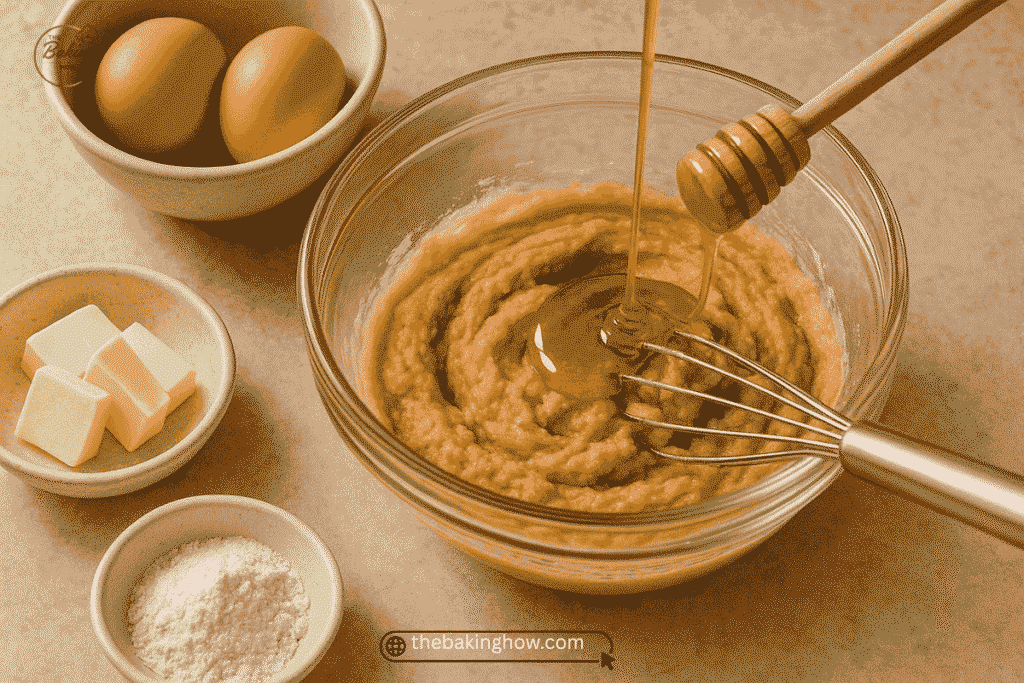
From a baker’s perspective — and after nearly 17 years working with commercial cookie formulations — I can confirm that honey acts as a natural humectant, which means it locks in moisture and gives cookies that soft, slightly chewy texture everyone loves.
Here’s what it does technically 👇
✅ Accelerates Browning: Honey speeds up the Maillard reaction, so cookies brown faster and develop a beautiful golden hue.
✅ Activates Baking Soda: The acidic nature of honey helps leaven cookies by reacting with baking soda — making them lighter in texture.
✅ Moisture Retention: Because it’s hygroscopic, honey keeps cookies soft and tender longer than dry sugars.
✅ Flavor Complexity: Adds subtle floral, caramel, or herbal notes depending on the nectar source.
⚠️ Pro Tip: Reduce oven temperature by about 10°C (20°F) when baking with honey to prevent over-browning. And since honey is liquid, reduce other liquids in the recipe slightly to maintain dough consistency.
Industrial Insight
“In commercial cookie manufacturing, honey is considered a premium syrup — used mainly for flavor enrichment and marketing appeal, rather than cost efficiency,” explains Saqlain Haider, cookie technologist with 17 years of experience in product formulation.
Practical Takeaway
Use honey when you want:
🍪 Chewy, moist cookies that stay fresh longer
🌸 Natural sweetness and aroma from floral notes
🔥 Deeper color and enhanced browning
But avoid using it as a 1:1 corn syrup substitute — honey changes dough hydration and leavening chemistry, so formula adjustment is key.
🍁 What Makes Maple Syrup Cookies Special?
Pure vs Imitation Maple Syrup
If you’ve ever wondered why authentic maple syrup cookies taste richer and more aromatic than the imitation ones, the secret lies in the syrup itself.
Pure maple syrup is tapped from the bark of sugar maple trees, where the sap naturally contains around 3% sucrose. Through careful evaporation, this sap is concentrated to 70–75% sugar, giving it that signature earthy-caramel flavor.
🔍 Grading System Explained:
- Grade A Light (Golden): Mild and delicate, ideal for subtle cookie notes.
- Grade A Amber: Balanced sweetness with a warm flavor, perfect for classic maple cookies.
- Grade A Dark: Robust and bold — great for pairing with spices or oats.
Imitation maple syrups, on the other hand, are usually made from corn syrup flavored with artificial extract. While they’re cheaper, they lack the nuanced flavor and complex aroma of real maple syrup. In professional baking, they often result in flat-tasting cookies without that deep amber color or rich aftertaste.
💬 “In 17 years of developing cookie recipes commercially, I’ve seen real maple syrup consistently outperform artificial syrups — both in flavor retention and customer preference,” says Saqlain Haider, cookie technologist and baking consultant.
Enhancing Maple Flavor in Cookies
Want that irresistible, cozy maple cookie flavor? Here’s how to maximize maple impact without overpowering the dough:
✅ Pair with Maple Extract:
A few drops of pure maple extract intensify flavor without extra moisture. It’s a professional trick to stretch the syrup’s natural aroma.
✅ Add Warm Companions:
Maple syrup pairs beautifully with:
- 🥜 Pecans – add nutty crunch and buttery depth.
- 🌾 Oats – enhance chewiness and absorb syrup evenly.
- 🌿 Cinnamon or nutmeg – bring warmth and complexity.
✅ Reduce Other Sugars:
Because maple syrup is already high in sucrose, cut back 10–15% of granulated sugar to keep the sweetness balanced and avoid sticky dough.
💡 Pro tip: Lower the oven temperature slightly (around 10°C / 20°F) when using maple syrup — its high sugar content causes faster browning. Maple syrup adds rich, buttery notes that pair beautifully with vanilla. Try combining it with vanilla for enhanced cookie flavor and aroma.
Industry Insight
Maple syrup is often used sparingly in large-scale cookie production due to its high cost, but it remains a premium flavoring agent in gourmet and artisanal cookies. Manufacturers blend it strategically with invert syrup or honey to balance sweetness and maintain cost-efficiency — without losing the maple character.
Practical Takeaway
Choose pure maple syrup for cookies when you want:
🍁 A natural, warm, aromatic sweetness
🥮 Even browning and soft texture
🌰 Perfect pairing with nuts and spices
Avoid imitation syrups unless you’re experimenting for cost control — they just can’t deliver the same depth, aroma, or mouthfeel as the real deal.

🧪 How Do You Substitute Syrups in Cookie Recipes?
When swapping syrups, remember sweetness varies—just like the difference between brown sugar vs. white sugar in cookies.
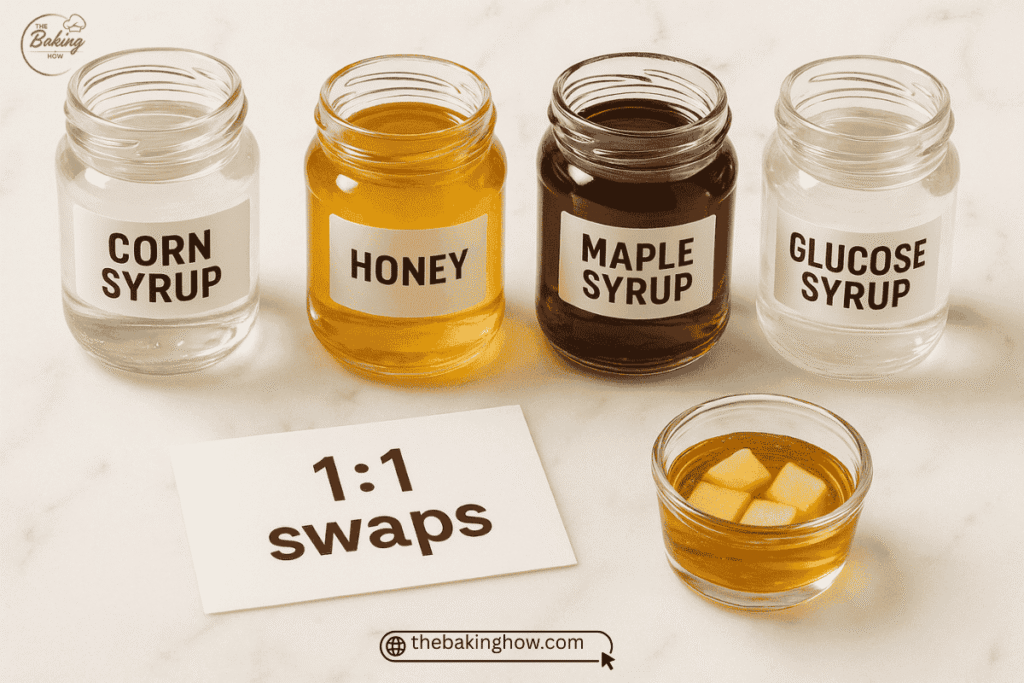
Syrup-to-Syrup Conversions
Swapping syrups in cookies sounds simple — until your dough turns runny or your cookies bake up too sweet. In professional baking, even a small change in syrup type can affect moisture balance, browning, and texture.
Let’s break it down like a pro 👇
| Syrup Type | Substitute | Ratio | Sweetness Level | Texture Impact |
| Corn Syrup | Honey | 1:1 | Slightly sweeter | Softer, more moist |
| Honey | Maple Syrup | 1:1 | Similar | More flavor depth, less chew |
| Glucose Syrup | Corn Syrup | 1:1 | Sweeter | Slightly softer texture |
| Invert Syrup | Golden Syrup | 1:1 | Very close | Richer color and flavor |
| Maple Syrup | Honey | 1:1 | More intense | Stickier dough |
🧪 Syrup Substitution Guide (Click to Expand)
🍯 Corn Syrup
Ratio: 1:1
Sweetness: Slightly sweeter
Texture: Softer, more moist
🍁 Honey
Ratio: 1:1
Sweetness: Similar
Texture: More flavor depth, less chew
🌾 Glucose Syrup
Ratio: 1:1
Sweetness: Sweeter
Texture: Slightly softer texture
🧈 Invert Syrup
Ratio: 1:1
Sweetness: Very close
Texture: Richer color and flavor
🍬 Maple Syrup
Ratio: 1:1
Sweetness: More intense
Texture: Stickier dough
💡 Tip: Tap any syrup to expand details.
💡 Pro insight (from 17 years in the cookie industry):
Always consider water content — syrups like honey and maple contain more moisture than corn syrup or glucose. For every ½ cup of liquid syrup, reduce other liquids in the recipe by 1 tablespoon to maintain dough consistency.
Sweetness Tip:
If using a high-fructose syrup (like HFCS or honey), reduce total syrup quantity by about 10–15% to avoid overly sweet cookies.
Emergency Substitutions (When You’re Out of Syrup!)
If you’re mid-recipe and realize you’re out of syrup, don’t panic — you can create quick fixes that save both flavor and texture.
1️⃣ Make Simple Syrup (for chewiness):
Mix 1 cup sugar + ¼ cup water. Heat until fully dissolved and slightly thickened. Cool before using.
Works best in soft-baked cookies or as a mild substitute for corn syrup.
2️⃣ Use Golden Syrup (for color & flavor):
Golden syrup adds a buttery, caramelized tone and slightly enhances chew. It’s also less sweet than honey, which helps balance flavor.
3️⃣ Add Invert Sugar or Honey (for softness):
Both prevent crystallization and help cookies stay moist longer, especially in humid climates.
⚖️ Quick Fix Formula:
If the dough feels too wet after substitution → add 1–2 teaspoons of flour per cup of syrup used to restore balance.
Key Takeaway
Yes — you can swap syrups in cookies, but smart bakers don’t do it blindly. Always adjust for sweetness, water content, and spread. With a little testing, you can turn any substitution into a cookie that’s just as chewy, flavorful, and stable as the original recipe.
🍪 Which Syrup Works Best for Different Cookie Types?
If your cookies spread too much, it might not just be butter—your syrup choice matters too. Here’s why cookies spread too much during baking.
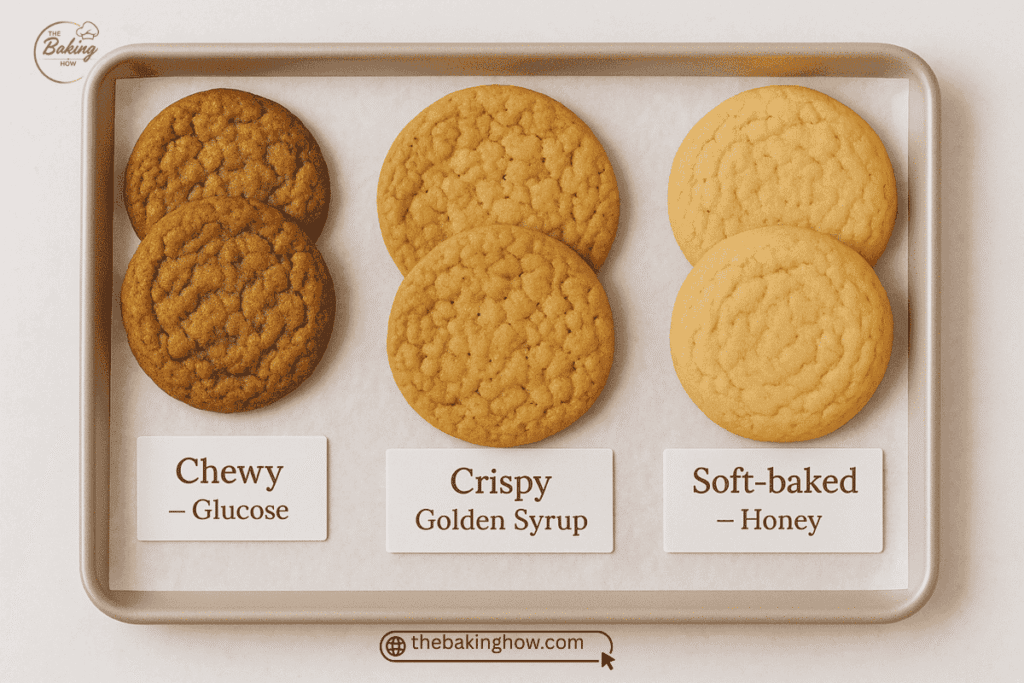
For Chewy Cookies
If you love that bend-without-breaking chew, syrups with high glucose content are your best allies.
Both corn syrup and glucose syrup act as humectants — they trap water molecules, slowing moisture loss even after baking.
💡 From my 17 years in the cookie industry:
Commercial chewy cookies almost always rely on a blend of glucose and invert syrup. The result? Long-lasting softness, flexible bite, and that “fresh from the oven” texture even days later.
Pro Ratio:
Use 10–15% syrup (by flour weight) for ideal chewiness. Going higher may cause spreading or stickiness.
Texture Tags:
🧁 Moist 💧 Elastic ⏳ Slow staling
For Crispy Cookies
If your goal is that buttery snap and caramelized crunch, turn to golden syrup or invert syrup.
Their high fructose levels and rich reducing sugars accelerate the Maillard reaction, creating deeper color and crisp edges.
✅ Industry Insight:
In professional formulations for butter crisps and shortbread, golden syrup often replaces a portion of sugar to produce an evenly golden hue and a satisfyingly brittle texture.
Pro Ratio:
Add 5–8% golden or invert syrup for thin, crisp results — any more may soften edges.
Texture Tags:
🍯 Caramelized 🔥 Crisp edges 🥄 Rich flavor
For Soft-Baked Cookies
Soft-baked cookies are all about gentle sweetness and a tender bite — and that’s where honey and maple syrup shine.
Both are hygroscopic and contain trace minerals and acids that interact beautifully with baking soda, creating subtle rise and tenderness.
💡 Pro Tip:
Warm your honey slightly before adding to the dough — this helps it dissolve evenly and enhances caramel notes.
Pro Ratio:
Replace up to ⅓ of your sugar with honey or maple syrup for pillowy softness without making dough overly sticky.
Texture Tags:
🌸 Tender 💧 Moist 🍁 Naturally flavored
| Cookie Type | Recommended Syrup | Texture Outcome | Flavor Profile |
|---|---|---|---|
| Chewy | Corn syrup / Glucose syrup | Soft, elastic | Neutral sweetness |
| Crispy | Golden syrup / Invert syrup | Caramelized crunch | Buttery, deep caramel |
| Soft-Baked | Honey / Maple syrup | Tender, moist | Floral or maple warmth |
💡 Tip: Use this as a quick texture guide — chewy cookies love glucose, crispy ones crave golden syrup, and soft-baked shine with honey or maple.
Key Takeaway
Every syrup behaves differently in the oven. If you crave chewy, reach for glucose or corn syrup. Want crisp edges? Golden syrup’s your friend. Prefer soft, fragrant cookies? Honey or maple syrup delivers that bakery-fresh comfort. For better understanding about texture try our cookie texture calculator.
With the right syrup, you’re not just sweetening — you’re engineering texture.
🧁 What Are the Common Mistakes When Using Syrups in Cookies?
Even the best bakers slip up when working with syrups. These liquid sweeteners can completely change your dough’s chemistry — for better or worse. Here’s how to avoid the most common syrup baking mistakes when making cookies.
Many bakers accidentally combine too many sweeteners. Before experimenting, check out common cookie baking mistakes you might be making.
Overly Sweet Results
Using syrups like honey, maple, or corn syrup can make cookies too sweet if you don’t adjust the recipe properly.
💡 Pro Tip:
- If you’re substituting syrup for sugar, reduce total sweeteners by about 25%. Syrups are more concentrated and hygroscopic (they retain moisture), which can intensify sweetness.
- Avoid mixing multiple syrups (for example, honey and corn syrup) unless your goal is a very rich or sticky texture — it often leads to overpowering flavor.
🧠 Science Insight:
Unlike granulated sugar, syrups contribute both sweetness and moisture. Too much can throw off the delicate balance that gives cookies their chew or crispness.
Texture & Spreading Issues
Liquid syrups affect cookie structure more than most ingredients. A little too much, and your dough may spread excessively or bake flat.
Troubleshooting Tips:
- If your cookies spread too much, chill the dough for at least 30 minutes before baking.
- For overly soft or greasy cookies, add 1–2 tablespoons of flour per cup of syrup used.
- When replacing a thick syrup (like glucose) with a thin one (like maple or honey), reduce liquid elsewhere in the recipe by 1–2 teaspoons.
Expert Note:
Professional bakers often test multiple syrup ratios before scaling recipes. The right balance depends on cookie type, baking temperature, and even oven humidity — factors home bakers rarely consider but make a huge difference.
✅ Takeaway:
Mastering syrup functionality isn’t just about flavor — it’s about control. Once you learn how to balance moisture, sweetness, and structure, your cookies will come out perfect every time chewy, crisp, or soft, exactly as you planned.
🧁 Common Mistakes When Using Syrups in Cookies
Even skilled bakers can struggle with syrup-based cookies — these sweeteners change dough chemistry fast! Here’s how to fix the most common issues.
🍯 Overly Sweet Results
Using syrups like honey, maple, or corn syrup without adjusting the recipe can make cookies excessively sweet.
- Reduce total sweeteners by about 25% when replacing sugar with syrup.
- Avoid mixing multiple syrups unless intentionally creating a rich or sticky texture.
💡 Pro Tip: Syrups are hygroscopic — they retain moisture, intensifying sweetness and chewiness.
🍪 Texture & Spreading Issues
Too much syrup can flatten cookies or make them overly soft and greasy.
- Chill the dough for at least 30 minutes to reduce spread.
- Add 1–2 tbsp flour per cup of syrup to balance structure.
- If using thin syrups like honey or maple, reduce other liquids slightly.
🧠 Science Insight: Syrups provide both moisture and sugar — too much disrupts gluten development and cookie lift.
🧑🍳 Expert Note
Professional bakers test several syrup ratios before scaling recipes. Balance depends on syrup type, bake temperature, and humidity — the hidden factors behind perfect cookies.
✅ Takeaway: Master moisture, sweetness, and structure — and you’ll never face syrup cookie mishaps again.
🧁 Conclusion: The Sweet Science of Syrups in Cookies
When it comes to syrups in cookies, there’s far more going on than sweetness alone. Each type—whether it’s corn syrup, honey, glucose, or maple syrup—plays a unique role in shaping texture, moisture, and flavor.
💡 Quick Recap:
- Corn syrup adds chewiness and prevents crystallization.
- Glucose syrup enhances shine and consistency.
- Honey brings natural sweetness, moisture, and golden color.
- Maple syrup delivers depth and a signature aroma.
- Dextrose and maltodextrin influence browning and mouthfeel in subtle, scientific ways.
Together, these liquid sweeteners transform simple cookie dough into a masterpiece balancing chemistry, texture, and taste.
🍯 Pro Baker’s Tip:
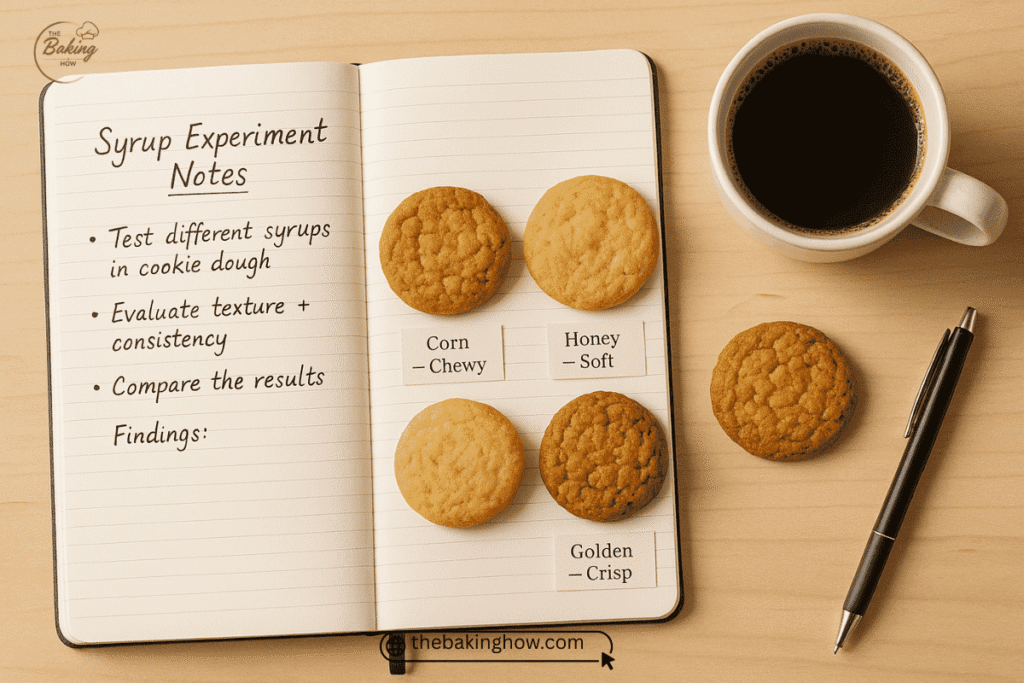
Don’t be afraid to experiment! Try swapping a portion of sugar with your favorite syrup and observe how it changes chewiness or crispness. You’ll start to see how baking is truly edible science.
Key Takeaway
Syrups aren’t just “sweeteners” — they’re functional ingredients that impact every bite. By understanding the science behind them, you can fine-tune your cookies to be softer, crispier, or more flavorful — just the way you want.
❓ FAQ About Syrups in Cookies
🍯 Can I substitute honey for corn syrup in cookies?
Yes — but it changes the flavor and texture. Honey is sweeter and more acidic than corn syrup, so use about ¾ cup of honey for every 1 cup of corn syrup. Expect slightly darker color and softer, more moist cookies.
💧 What’s the difference between glucose and corn syrup?
Corn syrup is made from corn starch and contains a mix of glucose and other sugars, while glucose syrup can be derived from various starches (corn, wheat, potato, or tapioca) and is often less sweet.
🍪 Do syrup cookies last longer than regular cookies?
Yes — syrups are hygroscopic, meaning they attract and retain moisture. This slows down staling and keeps cookies softer for several days longer than those made only with granulated sugar.
⚖️ How much syrup should I use in cookie recipes?
Start by replacing 25–50% of your sugar with syrup. Too much can make cookies spread excessively or become sticky. Adjust your flour slightly or chill dough to restore structure.
🧪 Can I make invert syrup at home?
Absolutely. Invert syrup is just sugar, water, and a bit of acid (like lemon juice) until partially broken down. It mimics commercial corn or glucose syrup for small-batch baking.

Thanks for sharing this with us , I’m a beginner and trust you i have learn a lot to start up my cookies business with